Smart Home Privacy
Top Smart Baby Monitors Without Cloud 2026
Compare the best local-first baby monitors in 2026: no cloud fees, FHSS/DECT or local Wi‑Fi options, TCO tables, and privacy-focused buying criteria.
Quick answer: Which baby monitors avoid cloud subscriptions in 2026?
Prioritize FHSS/DECT closed-loop systems (e.g. Infant Optics DXR-8 PRO, VTech VM819) or local Wi‑Fi monitors that do not require paid cloud tiers (e.g. Miku Pro, Harbor). Verify in the app that video stays on your LAN and that no subscription is required for core viewing.
Executive Summary
In 2026, the demand for smart baby monitors that operate without cloud subscriptions has surged, driven by concerns over privacy, cost, and reliability. Parents are increasingly seeking devices that offer advanced features like motion detection and breathing tracking while ensuring data remains local. This guide explores the top models that meet these criteria, providing a comprehensive comparison to help you make an informed decision. For broader device inventory and traffic analysis techniques, pair this purchase guide with our smart home privacy audit and how to block devices from the internet. Authoritative context on connected-product risk is summarized by the FTC’s consumer resources and NIST’s IoT cybersecurity program.
The bottom line is that choosing a smart baby monitor without a cloud subscription can enhance privacy and reduce costs, with options like the Infant Optics DXR-8 PRO and Miku Pro leading the market.
Privacy and Local Control: Why It Matters
Privacy is a paramount concern for parents when selecting a baby monitor. Devices that rely on cloud services can expose sensitive data to potential breaches. In contrast, monitors using FHSS (Frequency Hopping Spread Spectrum) or DECT (Digital Enhanced Cordless Telecommunications) encryption provide a secure, local-only transmission. These technologies ensure that your baby’s data remains within your home network, minimizing the risk of hacking.
For instance, the Infant Optics DXR-8 PRO employs FHSS technology, which is renowned for its interference-free and secure communication. This model does not connect to the internet, thereby eliminating the risk of cloud-based vulnerabilities. Similarly, the VTech VM819 uses DECT 6.0 encryption, offering robust security without the need for WiFi.
Choosing a monitor with local processing capabilities, such as the Miku Pro, which uses on-device AI for features like breathing tracking, further enhances privacy. These devices process data locally, ensuring that no sensitive information is uploaded to the cloud. This approach not only protects your privacy but also ensures that the monitor functions even if your internet connection is disrupted.
Offline Reliability: Ensuring Continuous Monitoring
Offline reliability is crucial for smart baby monitors, particularly in areas with unstable internet connections. Monitors that can operate independently of WiFi provide peace of mind, ensuring that you can always keep an eye on your child.
The VTech VM819 stands out with its impressive 1000-foot range and long battery life of up to 29 hours. This model’s ability to function without WiFi makes it an excellent choice for parents who prioritize reliability. Similarly, the Infant Optics DXR-8 PRO offers a robust offline experience, with a range suitable for most homes and a battery life that supports extended monitoring sessions.
These non-WiFi models are designed to be plug-and-play, requiring minimal setup and no app installations. This simplicity not only reduces the setup time but also minimizes potential points of failure, ensuring that the monitor remains operational at all times.
Smart Features Without Subscriptions
Advanced features like motion detection and breathing tracking are now available in baby monitors without the need for cloud subscriptions. These features enhance the functionality of the monitor, providing parents with valuable insights into their child’s well-being.
The Miku Pro is a prime example, offering mmWave technology for breathing tracking without requiring wearables. This feature operates entirely on-device, ensuring that no data is sent to the cloud. The Harbor monitor also provides local streaming with a dedicated screen, offering a comprehensive monitoring solution without ongoing fees.
These smart features are complemented by additional functionalities such as temperature and humidity sensors, which are available in models like the Infant Optics DXR-8 PRO. By choosing a monitor with these capabilities, you can gain a holistic view of your child’s environment, all while maintaining control over your data.
Total Cost of Ownership: Long-Term Savings
When evaluating smart baby monitors, it’s essential to consider the total cost of ownership (TCO). While upfront costs are important, ongoing expenses such as subscription fees and battery replacements can significantly impact the overall cost.
Monitors like the VTech VM819 and Infant Optics DXR-8 PRO offer substantial savings over time, as they do not require cloud subscriptions. The VTech model, for example, has a low upfront cost and minimal ongoing expenses, with battery replacements costing approximately $20 per year.
In contrast, cloud-based models often require monthly fees, which can add up over time. By opting for a subscription-free monitor, you can reduce your total costs by 30-50% compared to models that rely on cloud services. This cost-effectiveness makes non-subscription monitors an attractive option for budget-conscious parents.
| Model | Upfront Cost | Battery Life | Subscription Fees | 2-Year TCO |
|---|---|---|---|---|
| Infant Optics DXR-8 PRO | $150-180 | 10-12 hours | None | $150-180 |
| VTech VM819 | $80-110 | 19-29 hours | None | $100 |
| Miku Pro | $300+ | 12-15 hours | None | $320 |
| Harbor | $200 | 15-20 hours | None | $200 |
Baby monitors sit alongside cameras and voice assistants in a wider local-only smart home strategy; when you add Wi‑Fi models, treat them like any other IoT camera in your VLAN isolation plan.
| Transmission | Typical cloud need | Best for | Privacy note |
|---|---|---|---|
| FHSS / DECT | None | Minimal attack surface | No internet path; jamming is the main RF risk |
| Local Wi‑Fi (LAN) | None if vendor allows | App on same Wi‑Fi | Confirm no forced cloud upload; disable remote viewing if unused |
| Cloud-first Wi‑Fi | Almost always | Avoid for nursery | Video leaves the home by design |
Video and Usability: Enhancing the Monitoring Experience
The usability of a baby monitor is determined by factors such as video quality, night vision, and ease of use. High-resolution video and reliable night vision are essential for clear monitoring, especially in low-light conditions.
The Infant Optics DXR-8 PRO offers a 5” HD screen with pan, tilt, and zoom (PTZ) capabilities, allowing you to adjust the view as needed. This model’s high video quality ensures that you can see your child clearly at all times. The Eufy SpaceView, with its 1080p resolution and split-screen functionality, is another excellent option for parents with multiple children.
Usability is further enhanced by features like two-way audio, which allows you to communicate with your child remotely. Monitors that offer intuitive controls and easy setup, such as the VTech VM819, provide a seamless user experience, making them ideal for parents seeking convenience and reliability.
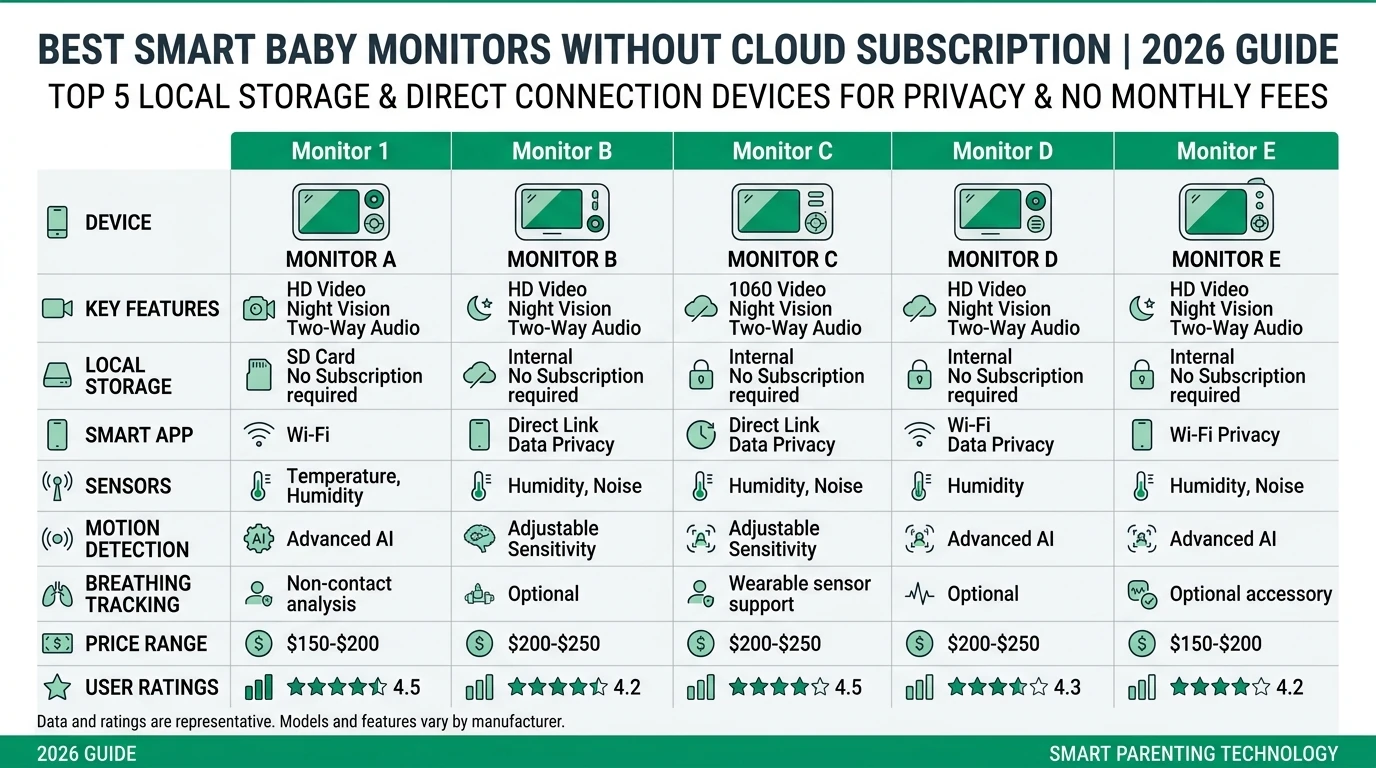
Setup Complexity and Support: What to Expect
The complexity of setting up a smart baby monitor can vary significantly between models. Non-WiFi monitors like the Infant Optics DXR-8 PRO and VTech VM819 are typically straightforward to set up, requiring only a few minutes to plug in and start using. These models do not require app installations or account setups, reducing the potential for technical issues.
In contrast, monitors that rely on local WiFi, such as the Miku Pro and Harbor, may require more time to set up due to app pairing and customization options. However, these models offer advanced features that can be tailored to your preferences, providing a more personalized monitoring experience.
Support for these devices is generally available through manuals and customer service hotlines. While firmware updates are rare for non-WiFi models, app-dependent monitors may require periodic updates to maintain functionality. It’s important to consider the potential support burden when choosing a monitor, especially if you prefer a low-maintenance solution.
Checklist
- Evaluate privacy features (FHSS/DECT)
- Consider offline reliability (range, battery life)
- Assess smart features (motion, breathing tracking)
- Calculate total cost of ownership
- Review video quality and usability
FAQ
Frequently Asked Questions
What is the best smart baby monitor without a cloud subscription?
The Infant Optics DXR-8 PRO and Miku Pro are top choices for 2026, offering privacy-focused features and local processing without cloud dependencies.
How do non-WiFi baby monitors ensure privacy?
Non-WiFi monitors use FHSS or DECT encryption to transmit data securely within your home, minimizing the risk of hacking.
Are there smart features available without subscriptions?
Yes, features like motion detection and breathing tracking are available in models like the Miku Pro, which processes data locally.
What is the total cost of ownership for these monitors?
Non-subscription monitors like the VTech VM819 and Infant Optics DXR-8 PRO offer significant savings, with a 2-year TCO of $100-$180.
How complex is the setup for these monitors?
Non-WiFi models are typically plug-and-play, while local WiFi models may require app pairing but offer more customization options.
Primary Sources Table
| Index | Title/Description | Direct URL |
|---|---|---|
| 1 | The Best Baby Monitors of 2026, Tested & Reviewed (Mommyhood101) | Mommyhood101 |
| 2 | The Best Baby Monitors of 2026 - YouTube | YouTube roundup |
| 3 | Best Baby Monitors of 2026: From Budget to Pro - Babysense | Babysense |
| 4 | Best Baby Monitors Families Love for 2026 - Bambi Baby | Bambi Baby |
| 5 | We Tested the Best Baby Monitors of 2026 - Babylist | Babylist |
Conclusion
Choosing a smart baby monitor without a cloud subscription in 2026 offers numerous benefits, including enhanced privacy, reduced costs, and reliable performance. By focusing on models that prioritize local processing and secure transmission, you can ensure your child’s safety while maintaining control over your data.