Buying Guides
Best Smart Home Sensors Without Cloud 2026
Discover the best smart home sensors for 2026 that operate without cloud subscriptions, ensuring privacy and offline reliability.
Quick answer:
Executive Summary
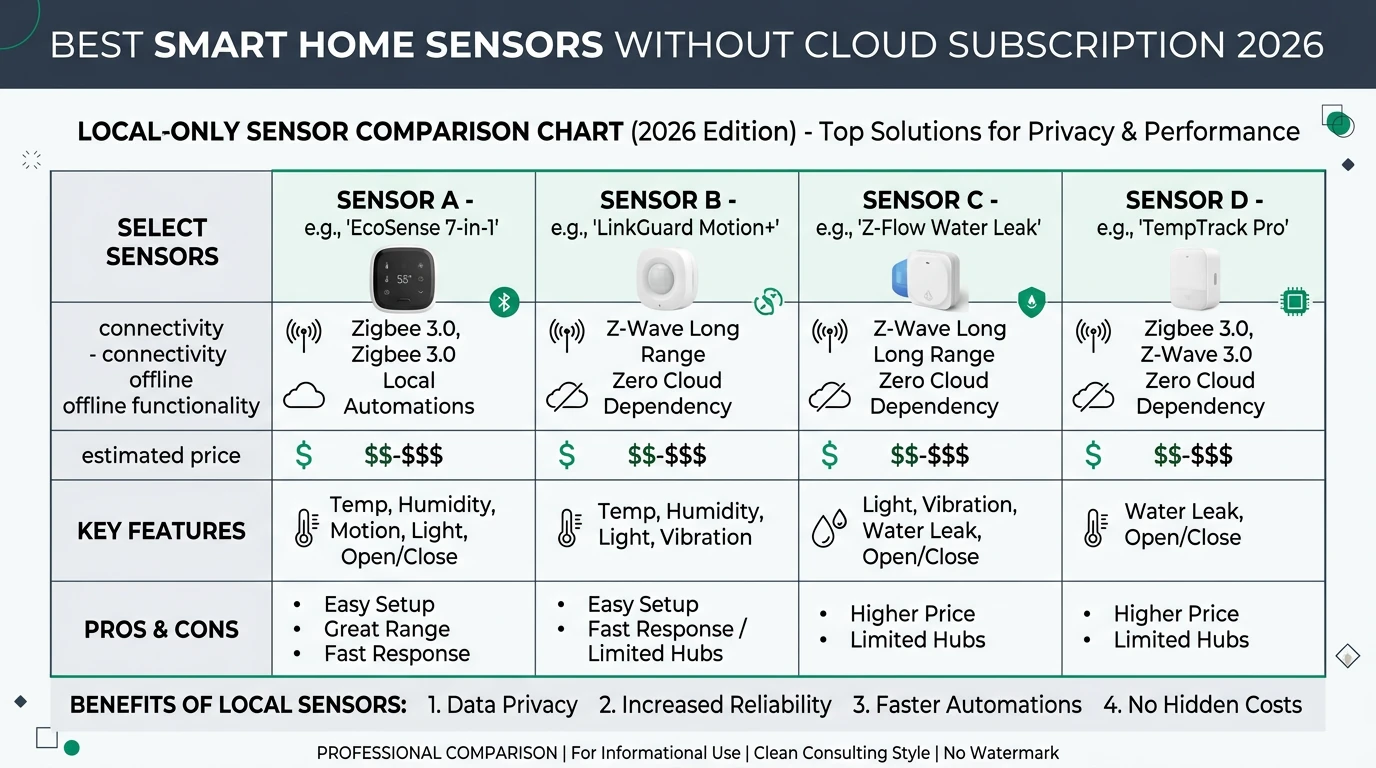
In 2026, the demand for smart home sensors that operate without cloud subscriptions is higher than ever. Users are increasingly prioritizing privacy, offline reliability, and cost-effectiveness. This guide explores the best options available, focusing on sensors that integrate with open ecosystems like Home Assistant and utilize protocols such as Zigbee, Z-Wave, and Matter. These sensors ensure that your data remains local, offering peace of mind and functionality even during internet outages.
Bottom line: For a secure and private smart home setup in 2026, choose sensors that operate locally without cloud dependencies, ensuring both privacy and reliability.
Why Choose Local-Only Smart Home Sensors?
Choosing local-only smart home sensors is crucial for maintaining privacy and ensuring reliability. Unlike cloud-dependent devices, these sensors process data locally, which means your personal information stays within your home network. This significantly reduces the risk of data breaches and unauthorized access, which are common concerns with cloud-based systems.
Local-only sensors also offer superior offline reliability. In the event of an internet outage, these devices continue to function seamlessly, providing uninterrupted service. This is particularly important for security sensors, such as motion detectors and door/window sensors, which need to operate continuously to ensure your home remains secure.
Moreover, opting for sensors without cloud subscriptions can lead to significant cost savings. Without recurring fees, the total cost of ownership (TCO) is lower, making these devices a more economical choice in the long run. This is especially beneficial for DIY enthusiasts who want to build a smart home system without incurring ongoing expenses.
Finally, local-only sensors often integrate well with open-source platforms like Home Assistant. This allows for greater customization and flexibility, enabling you to tailor your smart home setup to your specific needs. By choosing devices that support protocols like Zigbee, Z-Wave, and Matter, you can create a cohesive and efficient smart home ecosystem.
Top Smart Home Sensors Without Cloud Subscription
When selecting smart home sensors for a local-only setup, it’s essential to consider devices that offer robust privacy features and offline capabilities. The Hubitat Elevation hub is a standout choice, supporting Zigbee, Z-Wave, and Matter protocols. This hub allows for seamless integration with a variety of sensors, ensuring that your data remains local and secure.
Home Assistant-compatible sensors, such as the ZBT-2 Zigbee stick and ZWA-2 Z-Wave stick, are also excellent options. These devices enable fully local setups, allowing for advanced automation and integration with other smart home devices. The Apollo sensors, known for their reliability and ease of use, work well with Home Assistant, providing a comprehensive solution for privacy-focused users.
For those seeking security-focused sensors, the Ring system offers a robust solution with its 104dB siren and rapid alert speeds. Although primarily known for its cloud-based services, Ring’s local capabilities are noteworthy, especially when integrated with open-source platforms like Home Assistant.
The Abode Iota hub is another viable option, featuring built-in motion detection and support for Zigbee and Z-Wave protocols. This hub provides a solid foundation for a local-only smart home system, ensuring that your data remains secure and private.
Evaluating Privacy and Local Control
Privacy is a paramount concern for smart home users, and choosing sensors that operate without cloud dependencies is a key step in safeguarding your data. Devices that process information locally eliminate the need for cloud authentication, reducing the risk of data breaches and unauthorized access.
When evaluating sensors for privacy, look for those that support open protocols like Zigbee, Z-Wave, and Matter. These protocols ensure that data is encrypted and transmitted securely within your home network. The Hubitat Elevation hub, for instance, excels in this regard, offering native support for these protocols and ensuring that your data remains local.
Local control is another critical factor to consider. Sensors that operate independently of the cloud provide greater reliability, especially during internet outages. This is particularly important for security sensors, which need to function continuously to protect your home. The Home Assistant ZBT-2 and ZWA-2 sticks are excellent examples of devices that offer robust local control, allowing for seamless integration with other smart home devices.
In addition to privacy and local control, consider the ease of integration with open-source platforms. Sensors that work well with Home Assistant, for example, offer greater flexibility and customization, enabling you to tailor your smart home setup to your specific needs.
Checklist
- Choose sensors with local processing capabilities
- Ensure support for open protocols like Zigbee, Z-Wave, and Matter
- Prioritize devices that integrate with open-source platforms
- Evaluate the ease of setup and integration
Offline Reliability and Performance
Offline reliability is a crucial consideration for smart home sensors, ensuring that your devices continue to function even when the internet is down. This is particularly important for security sensors, which need to operate continuously to protect your home.
Sensors that support local processing and control offer superior offline reliability. Devices like the Hubitat Elevation hub and Home Assistant-compatible sensors are designed to function independently of the cloud, providing uninterrupted service even during internet outages. This ensures that your home remains secure and your data stays private.
Performance is another key factor to consider when evaluating smart home sensors. Look for devices that offer rapid alert speeds and high siren volumes, as these features are critical for effective security. The Ring system, for example, boasts a 104dB siren and rapid alert speeds, making it an excellent choice for security-focused users.
When assessing offline reliability, consider the battery life and power backup options for your sensors. Devices with long battery life and robust power backup systems ensure that your smart home setup remains operational even during extended outages.
Cost-Effectiveness and Total Cost of Ownership
One of the primary advantages of choosing smart home sensors without cloud subscriptions is the potential for cost savings. Without recurring fees, the total cost of ownership (TCO) is significantly lower, making these devices a more economical choice in the long run.
When evaluating the cost-effectiveness of smart home sensors, consider both the upfront costs and the long-term expenses associated with maintenance and operation. Devices like the Hubitat Elevation hub and Home Assistant-compatible sensors offer a low TCO, as they do not require cloud subscriptions or ongoing fees.
In addition to the initial purchase price, consider any hidden costs associated with your smart home setup. These may include battery replacements, power backup systems, and additional accessories needed for integration. By accounting for these expenses, you can make a more informed decision about the overall cost of your smart home system.
To maximize cost savings, look for sensors that offer long battery life and robust power backup options. These features ensure that your devices remain operational without incurring additional expenses, providing a more cost-effective solution for your smart home needs.
Integration with Open Ecosystems
Integrating smart home sensors with open ecosystems like Home Assistant offers numerous benefits, including greater flexibility, customization, and control. These platforms allow you to tailor your smart home setup to your specific needs, providing a more personalized and efficient solution.
When selecting sensors for integration with open ecosystems, look for devices that support open protocols like Zigbee, Z-Wave, and Matter. These protocols ensure seamless communication between devices, enabling you to create a cohesive and efficient smart home system.
The Hubitat Elevation hub is an excellent choice for integration with open ecosystems, offering native support for Zigbee, Z-Wave, and Matter protocols. This hub allows for seamless integration with a variety of sensors, ensuring that your data remains local and secure.
Home Assistant-compatible sensors, such as the ZBT-2 Zigbee stick and ZWA-2 Z-Wave stick, are also ideal for integration with open ecosystems. These devices enable fully local setups, allowing for advanced automation and integration with other smart home devices.
By choosing sensors that integrate well with open ecosystems, you can create a smart home setup that is both flexible and efficient, providing a more personalized and effective solution for your needs.
Primary Sources Table
| Index | Title/Description | Direct URL |
|---|---|---|
| 1 | Best No Monthly Fee Home Security Systems in 2026 (Security.org) | Security.org |
| 2 | Best No-Contract Home Security Systems of 2026 (SafeHome.org) | SafeHome.org |
| 3 | 11 Best Smart Home Automation Systems for 2026 Compared | Treasure Valley Solutions |
| 4 | My TOP 5 Smart Home Devices 2026 Edition (YouTube) | YouTube |
Conclusion
In conclusion, choosing smart home sensors that operate without cloud subscriptions offers numerous benefits, including enhanced privacy, offline reliability, and cost-effectiveness. By selecting devices that support open protocols and integrate with open ecosystems, you can create a smart home setup that is both secure and efficient.
For further insights into smart home privacy, explore our guide on Apple HomeKit Secure Video vs. Local NVR for Privacy, or learn about the Best Hardware for Local AI Smart Home 2026.
Frequently Asked Questions
What are the benefits of local-only smart home sensors?
Local-only smart home sensors enhance privacy by keeping data within your home network and offer offline reliability, ensuring functionality during internet outages.
Which protocols should I look for in smart home sensors?
Look for sensors that support open protocols like Zigbee, Z-Wave, and Matter for secure and seamless integration with other devices.
How do local-only sensors reduce costs?
Local-only sensors eliminate recurring cloud subscription fees, reducing the total cost of ownership and making them more economical in the long run.
Can local-only sensors integrate with open-source platforms?
Yes, many local-only sensors integrate well with open-source platforms like Home Assistant, offering greater customization and control.
What should I consider when evaluating offline reliability?
Consider the sensor’s alert speed, siren volume, battery life, and power backup options to ensure reliable performance during internet outages.