Buying Guides
Best Smart Thermostats Without Cloud or Subscription 2026
Explore the top smart thermostats of 2026 that offer cloud-free operation, ensuring privacy, reliability, and cost-effectiveness.
Quick answer: What are the best smart thermostats without cloud or subscription in 2026?
The Honeywell T6 Pro Z-Wave and Ecobee Essential Smart Thermostat lead for cloud-free operation. Honeywell offers robust Z-Wave local control; Ecobee provides local-only mode for privacy. Matter-based options are emerging but adoption varies.
Executive Summary
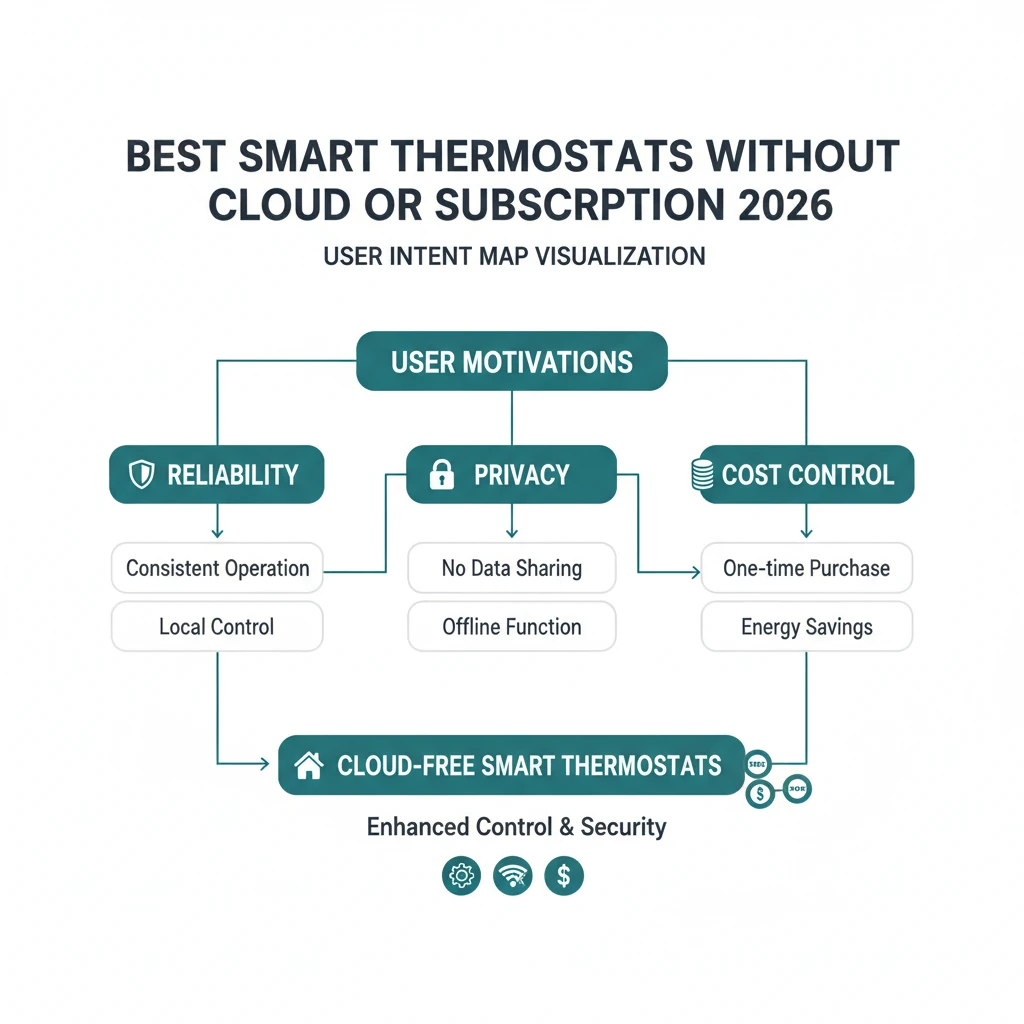
In 2026, the demand for smart thermostats that operate without cloud dependency has surged, driven by users’ desire for privacy, reliability, and cost control. This guide explores the best options available, focusing on thermostats that offer local control, eliminate subscription fees, and ensure operational independence. By prioritizing these features, users can maintain HVAC functionality during internet outages, protect their data from vendor surveillance, and avoid the pitfalls of service discontinuations.
Bottom line: Choosing a cloud-free smart thermostat in 2026 ensures privacy, reliability, and long-term cost savings, making it an ideal choice for tech-savvy homeowners seeking control over their smart home environments.
Understanding Local Control Protocols
Local control protocols are the backbone of cloud-free smart thermostats, determining how these devices communicate within a smart home ecosystem. In 2026, popular protocols include Z-Wave, Zigbee, Wi-Fi with local API, and the emerging Matter standard. Each protocol offers distinct advantages and challenges, influencing compatibility with existing systems and the complexity of setup.
Z-Wave and Zigbee thermostats require a local control hub, such as Home Assistant or Hubitat, to function offline. This setup provides robust local control but introduces additional setup complexity and cost. For example, the Honeywell T6 Pro Z-Wave is a reliable option, though its availability is reportedly declining1. Zigbee thermostats offer similar benefits, with a focus on energy efficiency and interoperability.
Wi-Fi thermostats with local API access, like the Ecobee Essential Smart Thermostat, maintain basic HVAC functionality during internet outages2. These devices offer a balance between convenience and privacy, though remote app control is unavailable without connectivity. Matter-based thermostats are gaining traction as a standard for local control, though adoption remains inconsistent, particularly regarding critical HVAC state reporting3.
Privacy score comparison for cloud-free thermostats
| Product | Cloud required | Local storage | Mandatory account | Offline control | Score / 10 |
|---|---|---|---|---|---|
| Honeywell T6 Pro Z-Wave | No | Local | No | Excellent | 9.0 |
| Ecobee Essential | No | Local | No | Good | 8.2 |
| Emerson Sensi ST55 | No | Local | No | Good | 8.0 |
| Matter-based options | Varies | Local | Varies | Good | 7.5 |
Offline Functionality and Reliability
Offline functionality is a critical feature for users seeking reliability during internet outages. Smart thermostats that operate independently of cloud services ensure that HVAC systems continue to function, regardless of connectivity issues. This capability is particularly important in areas prone to frequent internet disruptions or for users who prioritize uninterrupted climate control.
Z-Wave and Zigbee thermostats excel in offline functionality, as they rely on local hubs for communication. This setup ensures that core HVAC functions remain operational even when the internet is down. The Honeywell T6 Pro Z-Wave, for instance, offers robust offline performance, making it a popular choice among privacy-conscious users1. Similarly, Zigbee thermostats provide reliable offline control, though they require a compatible hub.
Wi-Fi thermostats with local API access also offer offline functionality, though with some limitations. While basic HVAC controls remain accessible, remote app features are unavailable without internet connectivity2. Matter-based thermostats are designed to support offline operation, though their effectiveness varies depending on the implementation and support for critical state reporting3.
| Protocol | Offline Support | Hub Required | Best For |
|---|---|---|---|
| Z-Wave | Full | Yes | Home Assistant users |
| Zigbee | Full | Yes | Energy-focused setups |
| Wi-Fi local API | Basic HVAC | No | Ecobee/Sensi users |
| Matter | Varies | Yes | Future-proof setups |
Checklist
- Ensure compatibility with existing smart home hubs.
- Verify local API access for Wi-Fi thermostats.
- Confirm support for critical HVAC state reporting in Matter-based options.
Integration with Smart Home Ecosystems
Integration with existing smart home ecosystems is a significant consideration for users seeking cloud-free smart thermostats. Compatibility with platforms like Home Assistant allows for complex automation logic and seamless integration with other smart devices. This capability enhances the overall smart home experience, providing users with greater control and customization options.
Z-Wave and Zigbee thermostats are well-suited for integration with Home Assistant, offering native support and extensive customization options. These devices enable users to create complex automation routines, such as multi-zone climate control or energy-saving schedules. The Honeywell T6 Pro Z-Wave, for example, integrates smoothly with Home Assistant, providing users with a reliable and flexible solution1.
Wi-Fi thermostats with local API access can also integrate with smart home platforms, though the process may require additional configuration. Users should verify the availability of local API documentation and ensure compatibility with their chosen platform. Matter-based thermostats are designed for seamless integration, though adoption remains inconsistent, particularly regarding state reporting3.
Security and Privacy Implications
Security and privacy are paramount for users seeking cloud-free smart thermostats. These devices eliminate the transmission of sensitive data to external servers, protecting users from vendor profiling and third-party data sales. By operating independently of cloud services, these thermostats reduce the attack surface and limit potential vulnerabilities.
Offline smart thermostats ensure data sovereignty by keeping HVAC usage patterns, temperature preferences, and scheduling data local4. This approach prevents vendor surveillance and exposure to cloud service breaches. Z-Wave and Zigbee thermostats, for example, rely on local hubs for communication, minimizing the risk of data interception.
Wi-Fi thermostats with local API access also offer enhanced privacy, though users should verify the security of local network configurations. Matter-based thermostats are designed with privacy in mind, though users should assess the implementation and support for critical state reporting3. Overall, cloud-free thermostats provide a more secure and private solution for smart home environments.
| Model | Est. Price | Protocol | Subscription |
|---|---|---|---|
| Honeywell T6 Pro Z-Wave | ~$115 | Z-Wave | None |
| Ecobee Essential | $150–200 | Wi-Fi | None |
| Emerson Sensi ST55 | $80–120 | Wi-Fi | None |
| Matter thermostat | $100–250 | Matter | None |
Setup Complexity and Support Burden
The setup complexity and support burden of cloud-free smart thermostats vary depending on the chosen protocol and integration requirements. Users should consider their technical competency and support needs when selecting a thermostat, as these factors influence the overall user experience and satisfaction.
Hub-based systems, such as Z-Wave and Zigbee thermostats, require the selection and installation of a local control hub. This process involves network configuration, device pairing, and automation logic creation, demanding a higher level of technical competency4. However, these systems offer maximum flexibility and ecosystem independence, making them ideal for tech-savvy users.
Wi-Fi thermostats with local API access offer a more straightforward setup process, though users should verify the availability of local API documentation. Integration with smart home platforms may require additional configuration, depending on the manufacturer’s transparency and support. Matter-based thermostats are designed for ease of use, though adoption remains inconsistent3.
Frequently Asked Questions
What are the benefits of cloud-free smart thermostats?
Cloud-free smart thermostats offer enhanced privacy, reliability during internet outages, and cost savings by eliminating subscription fees.
Do Z-Wave and Zigbee thermostats require a hub?
Yes, Z-Wave and Zigbee thermostats require a local control hub for offline functionality and integration with smart home platforms.
Can Wi-Fi thermostats operate without internet?
Wi-Fi thermostats with local API access can maintain basic HVAC functionality without internet, though remote app features are unavailable.
Are Matter-based thermostats widely supported?
Matter-based thermostats are gaining traction, though adoption remains inconsistent, particularly regarding critical HVAC state reporting.
What should I consider when choosing a cloud-free thermostat?
Consider compatibility with existing smart home systems, offline functionality, privacy implications, and setup complexity.
Primary Sources Table
| Source | URL | Type | Relevance |
|---|---|---|---|
| Vester Networks | vesternet.com/blogs/smart-home/building-a-truly-offline-smart-home-a-complete-guide-to-local-processing | Guide | Comprehensive offline smart home architecture; reliability, latency, and service discontinuation risks |
| Trane | trane.com/residential/en/resources/blog/smart-thermostat-faqs/ | FAQ | Wi-Fi thermostat offline functionality; remote diagnostics and support models |
| Home Assistant Community | community.home-assistant.io/t/2025-thermostat-thoughts-local-control/885959 | Forum | User experiences with Honeywell T6 Pro Z-Wave and Ecobee Essential; availability concerns |
| Home Assistant Community | community.home-assistant.io/t/best-preferably-wifi-local-only-matter-based-thermostat-for-ha-with-these-properties/710837 | Forum | Matter protocol limitations; state reporting gaps; Nest Learning thermostat reliability issues |
| M. Graves | mgraves.org/2025/11/smart-thermostat-goes-offline-not-cool/ | Blog | Local API control preference; vendor server dependency critique |
Conclusion
In conclusion, choosing a cloud-free smart thermostat in 2026 offers numerous benefits, including enhanced privacy, reliability, and cost savings. By prioritizing local control protocols and offline functionality, users can maintain HVAC functionality during internet outages and protect their data from vendor surveillance. While setup complexity and support burden vary, the long-term advantages of cloud-free thermostats make them an ideal choice for privacy-conscious homeowners.
Footnotes
-
Home Assistant Community, “2025 Thermostat Thoughts: Local Control.” ↩ ↩2 ↩3
-
Home Assistant Community, “Best Preferably WiFi Local Only Matter-Based Thermostat for HA with These Properties.” ↩ ↩2 ↩3 ↩4 ↩5
-
Vester Networks, “Building a Truly Offline Smart Home: A Complete Guide to Local Processing.” ↩ ↩2