Smart Home Privacy
Smart Home Server Shutdowns: Legal & Technical Options
Explore legal and technical options when smart home manufacturers shut down servers in 2026.
Quick answer: What happens when a smart home manufacturer shuts down its servers?
Devices lose cloud-dependent features like app control and voice integration; some become completely non-functional. Users can migrate to Home Assistant or local hubs, join class-action lawsuits, or advocate for right-to-repair. Prioritize Matter and local-control devices for new purchases.
Source: FTC, IoT Speak
Executive Summary
The shutdown of smart home servers by manufacturers poses significant challenges for device owners, decision-makers, and policy advocates. As cloud-dependent devices lose functionality, users are left with limited options, often requiring technical expertise or legal intervention. This guide explores the implications of server shutdowns, evaluates alternatives, and discusses potential legal remedies available in 2026.
Bottom line: Users must weigh the risks of cloud dependency against the benefits of local-server or offline solutions to ensure long-term functionality and security.
Understanding the Impact of Server Shutdowns on Smart Home Devices
When a smart home manufacturer shuts down its servers, the immediate impact is often a loss of cloud-dependent features. Devices that rely on cloud services for app control, automation, and voice integration may become partially or completely non-functional. For example, when Insteon shut down its servers, users lost the ability to control their devices remotely, and attempts to factory reset these devices resulted in permanent bricking1. This highlights the critical dependency on manufacturer support for continued device functionality.
The consequences of server shutdowns extend beyond mere inconvenience. Without access to cloud services, devices no longer receive software updates or security patches, increasing their vulnerability to cyber threats. This lack of updates can create back doors for hackers, exposing users to potential data breaches and unauthorized access2. As the Internet of Things (IoT) ecosystem expands, the attack surface grows, making it imperative for users to consider security implications when choosing smart home devices.
Moreover, the absence of manufacturer support means users must rely on third-party vendors for replacement parts, often at a higher cost and with limited availability. This situation underscores the importance of understanding the total cost of ownership (TCO) when investing in smart home technology. Devices marketed as “future-proof” can quickly become e-waste when servers are shut down, leaving users with the financial burden of replacing otherwise functional hardware3.
Legal Framework and User Rights in 2026
As of 2026, there is no comprehensive federal regulation requiring manufacturers to maintain servers, open APIs, or release source code upon shutdown. This regulatory gap leaves users with limited legal recourse once a shutdown is announced. The Federal Trade Commission (FTC) found that 89% of smart home products do not inform users when support will end, highlighting a significant transparency issue4.
Despite the lack of federal mandates, some states have begun to explore right-to-repair legislation, which could provide users with more control over their devices. These laws aim to ensure that consumers can access the necessary tools and information to repair and maintain their products independently. However, the effectiveness of such legislation in the context of smart home devices remains uncertain, as manufacturers may still control critical software and cloud services.
For users seeking legal remedies, class-action lawsuits have emerged as a potential avenue. These lawsuits can hold manufacturers accountable for failing to disclose shutdown plans or for prematurely discontinuing support. However, the success of such legal actions depends on the specifics of each case and the willingness of courts to recognize consumer rights in the digital age.
Evaluating Local-Server and Offline Alternatives
In response to the risks associated with cloud-dependent devices, many users are exploring local-server and offline alternatives. These solutions offer greater control over device functionality and security, as they do not rely on external servers for operation. Local-server setups, such as those using Home Assistant, allow users to manage their smart home ecosystem independently, albeit with increased setup complexity5.
Local-server solutions require technical expertise to configure and maintain, which can be a barrier for some users. However, they offer significant advantages in terms of privacy and security, as data is stored locally rather than in the cloud. This reduces the risk of data breaches and unauthorized access, providing users with peace of mind.
Offline-only devices present another viable option, particularly for users who prioritize simplicity and reliability. These devices operate independently of any server, ensuring that they remain functional regardless of manufacturer decisions. While they may lack advanced features like remote access and voice integration, offline devices offer a level of stability and longevity that cloud-dependent products cannot match.
Comparative Analysis: Cloud-Dependent vs. Local-Server Solutions
When comparing cloud-dependent and local-server solutions, several key criteria must be considered. Functionality after shutdown is a primary concern, as cloud-dependent devices often become severely degraded or non-functional. In contrast, local-server solutions remain fully operational as long as the local infrastructure is maintained6.
Remote access capability is another critical factor. Cloud-dependent devices lose this feature when servers are shut down, while local-server solutions can maintain remote access through virtual private networks (VPNs) or other configurations. Voice assistant integration is similarly affected, with cloud-dependent devices losing this functionality, whereas local-server solutions can potentially integrate with local alternatives.
Security patch availability is a significant concern for cloud-dependent devices, as manufacturers typically cease updates after a shutdown. Local-server solutions, however, can benefit from community-driven updates, particularly if they are open-source. This community support can extend the lifespan of devices and ensure continued security.
| Criterion | Cloud-Dependent | Local-Server | Offline-Only |
|---|---|---|---|
| Functionality after shutdown | Severely degraded or non-functional | Fully functional if servers remain accessible | Unaffected |
| Remote access capability | Lost | Requires VPN or alternative setup | Not available |
| Voice assistant integration | Lost | Possible with local alternatives | Not available |
| Security patch availability | Stopped | Depends on open-source community | N/A |
| User control over lifespan | Manufacturer-controlled | User-controlled | User-controlled |
| Scenario | Recommended action | Reference |
|---|---|---|
| Shutdown announced with notice | Migrate to Home Assistant or local hub before cutoff | — |
| Devices already bricked | Document for potential class action; consider right-to-repair advocacy | Pew Research |
| Planning new purchases | Prefer Matter, Zigbee, Z-Wave with local hub | Matter guide |
Security and Privacy Considerations
Security and privacy are paramount concerns when dealing with smart home devices, particularly in the context of server shutdowns. Devices that remain connected to the internet without receiving security updates are vulnerable to exploitation. This vulnerability can lead to ransomware attacks, data theft, and unauthorized access to connected systems7.
The lack of disclosure from manufacturers regarding shutdown plans exacerbates these risks. Users are often unaware of impending shutdowns, leaving them unprepared to transition to alternative solutions. This lack of transparency highlights the need for standardized disclosure requirements, ensuring that users are informed of potential changes to their device functionality.
Privacy concerns also arise from data retention policies. When manufacturers shut down servers, it is unclear whether user data is deleted or retained. This uncertainty can have significant implications for user privacy, as data stored on manufacturer servers may be vulnerable to breaches or misuse. Users should prioritize devices that offer clear data management policies and provide options for local data storage.
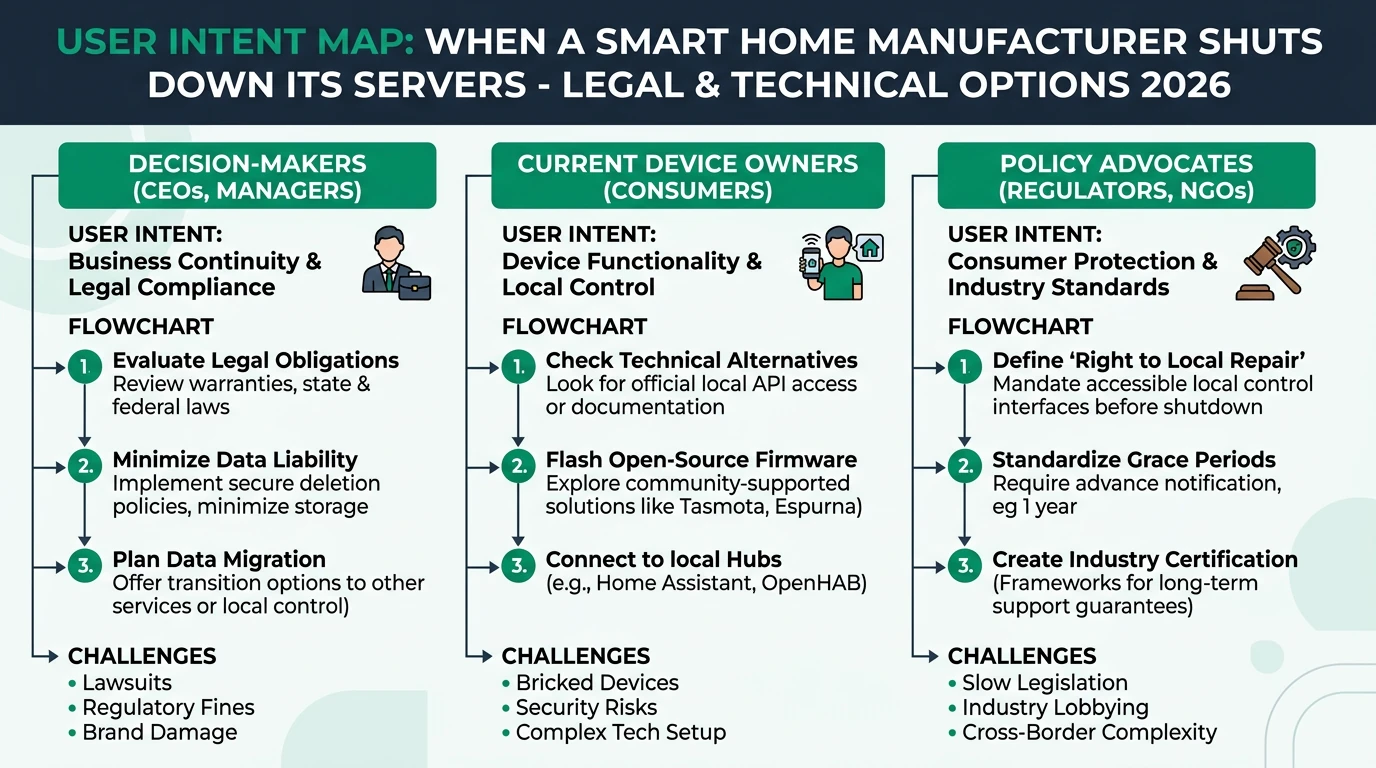
Practical Steps for Users Facing Server Shutdowns
For users facing server shutdowns, several practical steps can help mitigate the impact. First, assessing the current functionality of devices and identifying which features are cloud-dependent is crucial. This assessment will help users determine the extent of the impact and prioritize which devices require immediate attention.
Next, exploring local-server or offline alternatives can provide a path forward. Users should consider their technical expertise and willingness to manage infrastructure when evaluating these options. For those comfortable with technology, platforms like Home Assistant offer robust solutions that can replace cloud-dependent systems8.
Additionally, users should investigate potential legal remedies, such as joining class-action lawsuits or advocating for right-to-repair legislation. These actions can help hold manufacturers accountable and push for greater transparency and consumer rights in the smart home industry.
Checklist
FAQ
Frequently Asked Questions
What happens when a smart home manufacturer shuts down its servers?
Devices often lose cloud-dependent features like app control and voice integration, and some may become completely non-functional.
Are there legal options if a manufacturer shuts down its servers?
Legal options are limited, but users can explore class-action lawsuits or advocate for right-to-repair legislation.
What are local-server alternatives for smart home devices?
Local-server alternatives, such as Home Assistant, allow users to manage their smart home ecosystem independently, offering greater control and security.
How can I ensure my smart home devices remain functional after a server shutdown?
Consider using offline-only devices or setting up a local-server solution to maintain functionality and security.
What are the privacy implications of smart home server shutdowns?
Privacy concerns include data retention policies and the risk of data breaches due to lack of security updates.
Primary Sources Table
| Source | URL | Type | Relevance | Date |
|---|---|---|---|---|
| IoT Speak | https://www.wespeakiot.com/server-shutdown-those-who-trusted-the-cloud-are-left-behind/ | Opinion/Analysis | Comprehensive overview of manufacturer shutdowns; documents Bose, Amazon, Belkin, Devolo, Vorwerk, Apple, Telekom, Insteon cases | 2026 |
| TheStreet | https://www.thestreet.com/retail/tech-companys-likely-bankruptcy-to-affect-common-home-item | News | iRobot bankruptcy risk; 50 million devices affected; specific consequences of operational cessation | 2025 |
| YouTube | https://www.youtube.com/watch?v=AvpaUD5totU | Video Documentary | Insteon case study; FTC investigation finding (89% non-disclosure); factory reset bricking issue; open-source community response | March 2, 2026 |
| Pew Research Center | https://www.pewresearch.org/internet/2017/06/06/theme-2-unplugging-isnt-easy-now-and-by-2026-it-will-be-even-tougher/ | Research Report | Expert perspectives on IoT security risks; lack of local-server alternatives; regulatory gaps | 2017 |
| DBBNWA | https://www.dbbnwa.com/articles/cybersecurity-measures-stall-amid-shutdown-uncertainty/ | Analysis | Cybersecurity implications of service discontinuation; federal regulatory delays; business impact | 2026 |
Conclusion
The shutdown of smart home servers by manufacturers presents significant challenges for users, from loss of functionality to increased security risks. As the smart home industry evolves, users must carefully consider their options, balancing the convenience of cloud-dependent devices with the reliability and control offered by local-server and offline solutions. By staying informed and advocating for greater transparency and consumer rights, users can navigate the complexities of smart home technology with confidence.