Comparisons
Off-Grid Smart Home with Low Power 2026
Explore off-grid smart home systems for 2026, focusing on low power consumption, privacy, and cost-effective solutions.
Quick answer:
Executive Summary
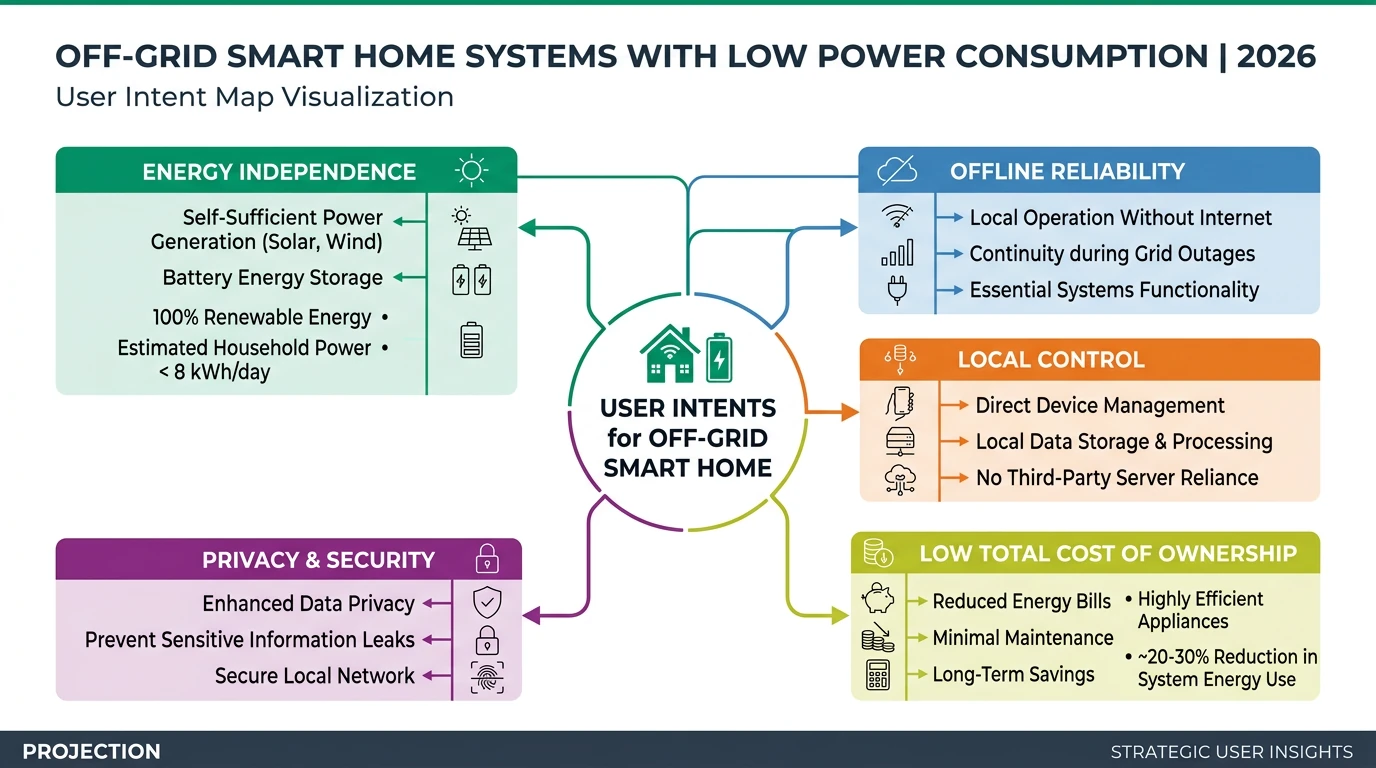
As we move into 2026, the demand for off-grid smart home systems with low power consumption continues to rise. Homeowners are increasingly seeking energy independence, driven by the desire to minimize reliance on traditional power grids. These systems are designed to handle substantial daily energy needs, typically ranging from 18 to 35 kWh, while maintaining offline reliability. The integration of solar inverters, lithium iron phosphate (LFP) batteries, and AI-driven management systems like iHEMS allows for real-time optimization and local control, enhancing both privacy and efficiency. The goal is to achieve a low total cost of ownership (TCO) under $150,000 for mid-sized setups, making these systems accessible to a broader audience.
The bottom line is that off-grid smart home systems in 2026 offer a viable path to energy independence, with significant advancements in technology ensuring both efficiency and privacy.
Privacy and Local Control
In the realm of off-grid smart home systems, privacy and local control are paramount. Users are increasingly concerned about the potential for data breaches and the misuse of personal information. Systems like iHEMS offer a solution by enabling local optimization through on-device AI, which avoids the need for constant cloud connectivity. This approach not only enhances privacy but also ensures that the system remains operational even in the absence of an internet connection1.
The iHEMS system exemplifies this trend by providing app-based rules that allow homeowners to manage their energy consumption without relying on telemetry. By avoiding remote-heavy systems, users can achieve up to 92% energy utilization, a significant improvement over traditional setups. This local-first design minimizes the risk of data exposure and enhances the overall security of the system2.
Moreover, platforms like Savant support peer-to-peer energy sharing among homes, further reducing the need for utility data exposure. This feature is particularly appealing to privacy-conscious users who wish to maintain control over their energy usage patterns. However, it is important to note that some inverters still include remote telemetry, which could potentially leak usage patterns. Therefore, opting for systems that prioritize on-device processing is crucial for maintaining privacy3.
Offline Reliability
Offline reliability is a critical factor for homeowners seeking off-grid solutions. These systems must be capable of providing continuous power output, with the ability to handle surge capacity and offer several days of backup. A typical setup might include a 16kW continuous output with a surge capacity of 2-3 times that amount, ensuring that even high-demand appliances can be supported4.
For instance, a system designed to support 32-35 kWh of daily use would require a storage capacity of approximately 115-161 kWh. This level of storage ensures that the home can remain powered for 3-5 days without sunlight, a crucial feature for regions with variable weather conditions. The use of LFP batteries is particularly advantageous in this context, as they offer long life cycles and high efficiency5.
The integration of AI-driven management systems further enhances offline reliability by optimizing energy use in real-time. These systems can dynamically adjust power distribution based on current demand and available resources, reducing the likelihood of outages and extending the lifespan of the battery storage6.
Low Power Consumption
Achieving low power consumption is a key goal for off-grid smart home systems. Efficiency is measured not only by the system’s ability to meet daily kWh needs but also by its overall energy conversion efficiency. For example, a system with a peak efficiency of 97.5% ensures that minimal energy is lost during the conversion process, maximizing the utility of the generated power7.
A typical off-grid setup might include a 10kW solar array, which is sufficient for most homes. This setup would require approximately 52 solar panels, covering an area of about 578 square feet. The scalability of solar installations allows homeowners to adjust their systems based on their specific energy needs and available space8.
It’s important to consider the geographic location when planning an off-grid system. Homes in the Northeast, for example, may require 20% more storage capacity than those in the Southwest due to differences in sunlight availability. This consideration ensures that the system remains efficient and reliable throughout the year9.
Low Power Consumption Checklist
- Ensure system efficiency of at least 97.5%
- Plan for 10kW solar array with 52 panels
- Adjust storage capacity based on geographic location
- Consider scalability for future energy needs
Total Cost of Ownership
The total cost of ownership (TCO) is a crucial consideration for homeowners investing in off-grid systems. The upfront costs can range from $116,000 in regions like Arizona, where sunlight is abundant, to $146,000 in Massachusetts, where additional storage is necessary to account for less consistent sunlight10. These figures include the cost of solar panels, inverters, batteries, and installation.
Incentives can significantly reduce the TCO, with potential savings of up to 30% through federal and state programs. However, it’s important to note that these incentives are typically available for hybrid systems rather than pure off-grid setups. Despite this, the long-term savings on energy bills can offset the initial investment, making off-grid systems a financially viable option for many homeowners11.
Hidden costs, such as battery replacement and maintenance, should also be considered. While systems like iHEMS can extend battery life by 20%, batteries will still need to be replaced approximately every 10 years, at a cost of around $30,000 for a 30kWh setup. Maintenance costs typically range from 1-2% of the system’s value annually12.
Product Ecosystem
The product ecosystem for off-grid smart home systems is diverse, with a range of components that can be tailored to meet specific needs. Core components include solar photovoltaic (PV) panels, inverters, batteries, and smart management systems. Each of these plays a crucial role in ensuring the system’s efficiency and reliability13.
For example, the Ktech 16kW inverter, paired with iHEMS, offers a comprehensive solution that coordinates the operation of PV panels, batteries, and AC loads. This integration allows for real-time optimization, boosting energy utilization to 92% and reducing downtime by 65%. The system is compatible with NEMA standards, ensuring safe and reliable operation14.
Another option is the EcoFlow DELTA Pro 3, which offers a scalable 10kW solution for homes. This system is particularly appealing for those seeking portability, as it includes portable stations like the VTOMAN FlashSpeed Pro, which provides 3600W of power and features 14 ports for various devices15.
Security and Privacy Implications
Security and privacy are critical considerations for off-grid smart home systems. The use of local control systems like iHEMS minimizes privacy risks by enabling offline AI optimization without the need for constant cloud synchronization. This approach reduces the potential for data breaches and ensures that the system remains secure even in the absence of an internet connection16.
Platforms like Savant support peer-to-peer energy sharing among homes, further enhancing privacy by reducing the need for utility data exposure. However, some systems still include remote telemetry, which could potentially leak usage patterns. Therefore, it is essential to choose systems that prioritize on-device processing to maintain privacy17.
While no breaches have been reported in 2026, the importance of offline reliability cannot be overstated. By ensuring that the system can operate independently of the internet, homeowners can protect themselves against potential security vulnerabilities18.
Setup Complexity and Support Burden
Setting up an off-grid smart home system can be complex, requiring careful planning and professional installation. The process involves sizing the PV array, integrating the inverter and battery systems, and wiring for split-phase loads. For systems ranging from 16 to 20kW, professional installation is recommended to ensure safety and efficiency19.
Once installed, systems like iHEMS simplify ongoing management with automated rules and remote diagnostics, reducing downtime by 65%. Vendor apps from companies like Ktech and EcoFlow provide local troubleshooting support, further easing the burden on homeowners20.
The complexity of the setup scales with the size of the system. For example, a 20kW kit requires approximately 1,168 square feet of roof or ground space. While portable units like the VTOMAN FlashSpeed Pro offer a lower burden for partial off-grid solutions, larger systems demand more extensive planning and resources21.
Price Model and Hidden Costs
The price model for off-grid smart home systems includes both upfront costs and ongoing expenses. Upfront costs can range from $116,000 to $146,000, depending on the region and specific system requirements. These costs cover the solar panels, inverters, batteries, and installation22.
Incentives can significantly reduce the overall cost, with potential savings of up to 30% through federal and state programs. However, these incentives are typically available for hybrid systems rather than pure off-grid setups. Despite this, the long-term savings on energy bills can offset the initial investment23.
Hidden costs, such as battery replacement and maintenance, should also be considered. While systems like iHEMS can extend battery life by 20%, batteries will still need to be replaced approximately every 10 years, at a cost of around $30,000 for a 30kWh setup. Maintenance costs typically range from 1-2% of the system’s value annually24.
FAQ
Frequently Asked Questions
What is the typical lifespan of an off-grid smart home system?
The typical lifespan of an off-grid smart home system is around 20-25 years, with batteries needing replacement every 10 years.
How does local control enhance privacy in off-grid systems?
Local control enhances privacy by enabling on-device AI optimization, reducing the need for cloud connectivity and minimizing data exposure.
Can off-grid systems handle high-demand appliances?
Yes, off-grid systems can handle high-demand appliances with continuous outputs of up to 16kW and surge capacities of 2-3 times that amount.
What are the main components of an off-grid smart home system?
The main components include solar PV panels, inverters, batteries, and smart management systems for real-time optimization.
Are there any incentives available for off-grid systems?
Incentives are typically available for hybrid systems, with potential savings of up to 30% through federal and state programs.
Primary Sources Table
| Index | Title/Description | Direct URL |
|---|---|---|
| [1] | 2026 Guide to Deploying 16kW Intelligent Off-Grid Solar Inverters | Energy Central |
| [2] | 5-Years Off-Grid - We’re Due For Some Big Changes In 2026 (YouTube) | YouTube |
| [3] | American Homes Declare Energy Independence in 2026 - CEPRO | CEPRO |
| [4] | How Much Solar Power Does It Take To Go off the Grid? (EcoFlow) | EcoFlow |
| [5] | Living off the Grid: The Complete Guide for 2026 - VTOMAN | VTOMAN |
| [6] | 2026 Trends: The Future of Home Energy Storage Solutions | Anern Store |
| [7] | Off-Grid Solar: Costs, Process, and Best Products in 2024 (EnergySage, prices to 2026) | EnergySage |
| [8] | Off-Grid Solar System: The Secret to Enjoying Off-Grid Living in 2026 | Solar Vision AI |
Conclusion
In conclusion, off-grid smart home systems in 2026 offer a compelling solution for homeowners seeking energy independence, privacy, and efficiency. By integrating advanced technologies like solar inverters, LFP batteries, and AI-driven management systems, these setups provide reliable and cost-effective energy solutions. While the initial investment may be significant, the long-term benefits in terms of energy savings and independence make it a worthwhile consideration for many.
For further insights on privacy-focused home solutions, consider exploring our guides on Apple HomeKit Secure Video vs. Local NVR for Privacy, Best Local Storage Security Cameras Without Subscription 2026, and Best Open Source Smart Home Software for Privacy Advocates.
Footnotes
-
Energy Central, “2026 Guide to Deploying 16kW Intelligent Off-Grid Solar Inverters.” ↩
-
YouTube, “5-Years Off-Grid - We’re Due For Some Big Changes In 2026.” ↩
-
CEPRO, “American Homes Declare Energy Independence in 2026.” ↩
-
EcoFlow, “How Much Solar Power Does It Take To Go off the Grid?” ↩
-
VTOMAN, “Living off the Grid: The Complete Guide for 2026.” ↩
-
Anern Store, “2026 Trends: The Future of Home Energy Storage Solutions.” ↩
-
EnergySage, “Off-Grid Solar: Costs, Process, and Best Products in 2024.” ↩
-
Solar Vision AI, “Off-Grid Solar System: The Secret to Enjoying Off-Grid Living in 2026.” ↩
-
EnergySage, “Off-Grid Solar: Costs, Process, and Best Products in 2024.” ↩
-
Energy Central, “2026 Guide to Deploying 16kW Intelligent Off-Grid Solar Inverters.” ↩
-
CEPRO, “American Homes Declare Energy Independence in 2026.” ↩
-
Anern Store, “2026 Trends: The Future of Home Energy Storage Solutions.” ↩
-
Energy Central, “2026 Guide to Deploying 16kW Intelligent Off-Grid Solar Inverters.” ↩
-
EcoFlow, “How Much Solar Power Does It Take To Go off the Grid?” ↩
-
VTOMAN, “Living off the Grid: The Complete Guide for 2026.” ↩
-
Anern Store, “2026 Trends: The Future of Home Energy Storage Solutions.” ↩
-
EnergySage, “Off-Grid Solar: Costs, Process, and Best Products in 2024.” ↩
-
Solar Vision AI, “Off-Grid Solar System: The Secret to Enjoying Off-Grid Living in 2026.” ↩
-
Energy Central, “2026 Guide to Deploying 16kW Intelligent Off-Grid Solar Inverters.” ↩
-
EcoFlow, “How Much Solar Power Does It Take To Go off the Grid?” ↩
-
VTOMAN, “Living off the Grid: The Complete Guide for 2026.” ↩
-
Anern Store, “2026 Trends: The Future of Home Energy Storage Solutions.” ↩
-
EnergySage, “Off-Grid Solar: Costs, Process, and Best Products in 2024.” ↩
-
Solar Vision AI, “Off-Grid Solar System: The Secret to Enjoying Off-Grid Living in 2026.” ↩