Buying Guides
Privacy-Safe Smart Home Devices for Airbnb Rentals in 2026
Explore privacy-safe smart home devices for Airbnb rentals in 2026, focusing on compliance, local control, and cost efficiency.
Quick answer: What are the best privacy-safe smart home devices for Airbnb rentals in 2026?
For Airbnb hosts in 2026, the best privacy-safe smart home devices include Z-Wave/Zigbee hubs for local control, keypad locks for offline reliability, and exterior-only cameras with privacy zones to comply with Airbnb's strict privacy policies.
Executive Summary
In 2026, Airbnb hosts face the challenge of integrating smart home devices that ensure guest privacy, comply with Airbnb’s policies, and offer local control and offline reliability. The focus is on devices that avoid indoor cameras, leverage local storage, and operate efficiently without constant internet connectivity. This guide evaluates smart home devices based on privacy, local control, offline reliability, and total cost of ownership (TCO). Hosts can enhance guest trust and operational efficiency by choosing the right devices, such as Z-Wave/Zigbee hubs, keypad locks, and exterior-only cameras.
Bottom line: Selecting the right privacy-safe smart home devices can significantly improve guest satisfaction and operational efficiency while ensuring compliance with Airbnb’s policies.
Privacy Considerations for Airbnb Smart Home Devices
Privacy is a paramount concern for Airbnb hosts, especially with the 2026 policies that strictly prohibit indoor cameras and require full disclosure of any recording devices. Hosts must navigate these regulations while ensuring their properties are secure and guest-friendly. The use of exterior-only cameras with privacy zones is a recommended approach, as it allows for monitoring without infringing on guest privacy. Airbnb’s 2026 policies strictly require full disclosure of any recording devices1. These cameras should be strategically placed to cover entry points and common areas without capturing private spaces.
Local storage solutions are preferred over cloud-based systems to minimize data breach risks. Devices that store data locally, such as those using Z-Wave or Zigbee protocols, offer enhanced security by isolating the network from the internet. This setup not only protects guest data but also aligns with Airbnb’s privacy mandates, reducing the risk of non-compliance penalties2.
Moreover, transparency is crucial. Hosts must clearly disclose the presence of any monitoring devices in their listings. This transparency builds trust with guests and ensures compliance with Airbnb’s rules. Failure to disclose can lead to listing removals or fines, impacting the host’s business negatively3. Therefore, choosing devices that facilitate easy compliance and guest communication is essential.
Privacy score comparison
| Product | Cloud required | Local storage | Mandatory account | Offline control | Score / 10 |
|---|---|---|---|---|---|
| Aeotec Smart Home Hub | No | Yes | No | Yes | 9.5 |
| August Wi-Fi 4th Gen | Optional | Yes | Optional | Yes | 8.5 |
| UniFi Doorbell Pro | No | Yes | No | Yes | 9.0 |
Privacy-focused smart home devices should also avoid audio recording capabilities in restricted areas. This ensures that guests feel secure and respected during their stay. By adhering to these privacy considerations, hosts can maintain high occupancy rates and positive reviews, ultimately benefiting their business.
Local Control and Offline Reliability
Local control is a critical feature for smart home devices in Airbnb rentals, as it ensures that the devices function independently of internet connectivity. This is particularly important in areas with unreliable internet service. Z-Wave and Zigbee hubs, such as the Aeotec Smart Home Hub, are ideal for this purpose. They centralize control over various devices, including locks, thermostats, and sensors, allowing them to operate seamlessly even when offline4.
Offline reliability is further enhanced by using devices with long battery life and physical backups. Keypad locks with fallback keys, like those from Yale or Schlage, provide a reliable entry solution that doesn’t rely solely on smartphone apps. These locks can store multiple codes, which can be auto-expiring, reducing the need for manual intervention and minimizing the risk of lockouts5.
The use of non-recording sensors, such as noise or occupancy sensors, adds another layer of security without compromising privacy. These sensors can alert hosts to potential issues, such as unauthorized parties, without recording audio or video. This setup aligns with Airbnb’s privacy policies while providing hosts with peace of mind6.
By focusing on local control and offline reliability, hosts can reduce their dependency on internet connectivity and cloud services, lowering the total cost of ownership and enhancing the guest experience.
Total Cost of Ownership (TCO) and ROI
The total cost of ownership (TCO) for smart home devices in Airbnb rentals is a crucial consideration for hosts. It encompasses upfront costs, ongoing maintenance, and potential savings from increased efficiency and guest satisfaction. Smart home ecosystems that rely on local hubs, such as Z-Wave or Zigbee, tend to have lower TCO due to reduced dependency on cloud services and fewer data breach risks7.
Upfront costs for a comprehensive smart home setup can range from $800 to $1500, depending on the devices chosen. This includes locks, hubs, cameras, and sensors. While the initial investment may seem significant, the return on investment (ROI) can be substantial. Hosts can achieve a 10-20% increase in occupancy rates and positive reviews by providing a secure and seamless guest experience8.
Maintenance costs are minimized through the use of low-energy protocols and devices with long battery life. For example, Z-Wave devices typically have a battery life of over six months, reducing the frequency of replacements and associated costs. Additionally, automation features, such as auto-expiring codes and scheduled HVAC adjustments, further enhance efficiency and reduce operational burdens9.
By carefully selecting devices that offer a balance of upfront cost, ongoing maintenance, and operational efficiency, hosts can achieve a favorable TCO and significant ROI, making their Airbnb rentals more competitive and profitable.
Recommended Smart Home Ecosystem
A well-integrated smart home ecosystem is essential for Airbnb hosts seeking to enhance privacy, control, and efficiency. The recommended ecosystem for 2026 includes a Z-Wave/Zigbee hub, such as the Aeotec Smart Home Hub, which centralizes control over various devices. This hub can integrate with Airbnb’s property management systems (PMS) to automate tasks like code generation and guest check-ins10.
Key components of this ecosystem include smart locks, such as the August Wi-Fi 4th Gen or Yale/Schlage keypads, which offer both PIN and physical key access. These locks are compatible with Airbnb’s systems, allowing for seamless guest entry and exit. Exterior-only cameras, like the UniFi Doorbell Pro or ecobee models, provide security without infringing on guest privacy, thanks to privacy zones and local storage11.
Additional devices, such as Minut or Alertify noise and occupancy sensors, monitor common areas without recording, ensuring compliance with privacy regulations. Smart thermostats, like the Ecobee, automate HVAC systems, enhancing energy efficiency and guest comfort12.
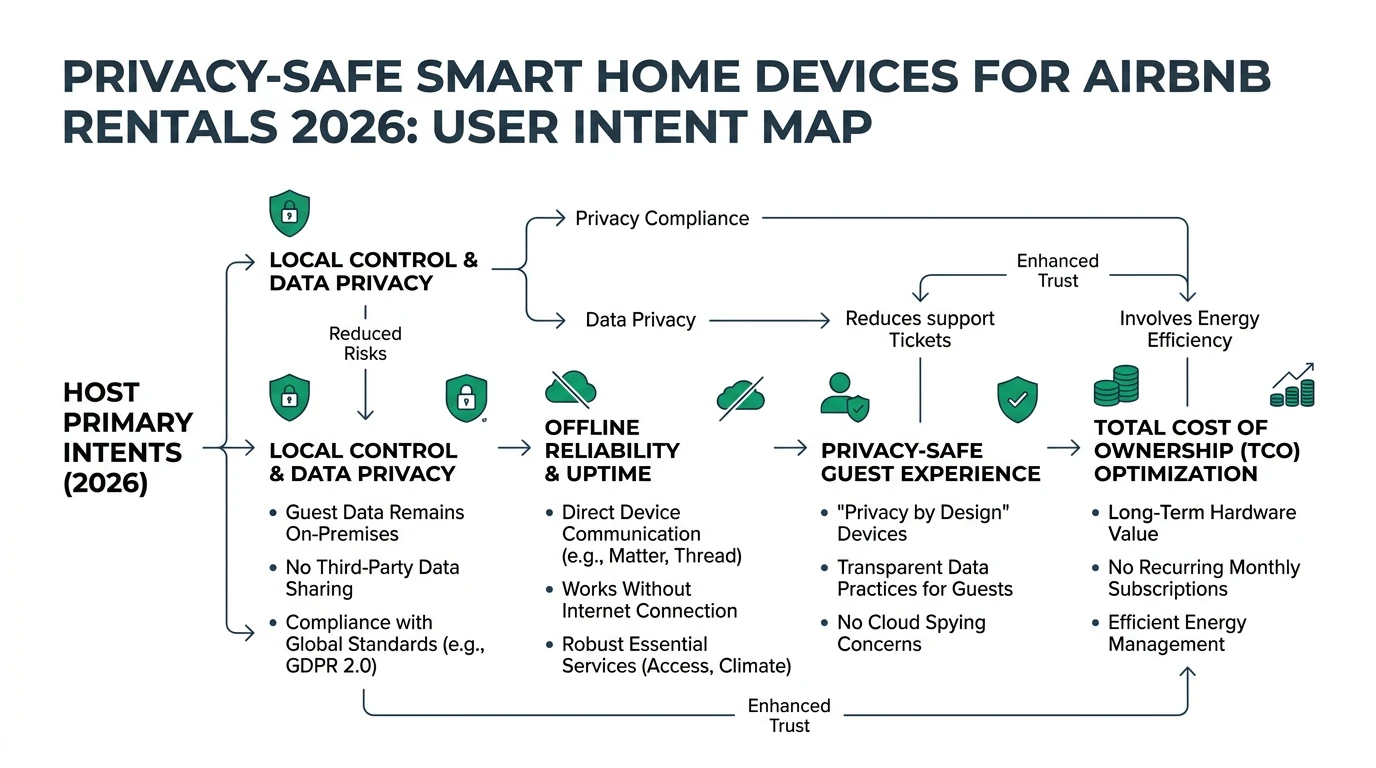
By adopting this recommended ecosystem, hosts can achieve a high level of operational efficiency, guest satisfaction, and compliance with Airbnb’s privacy policies.
Security and Privacy Implications
Security and privacy are intertwined concerns for Airbnb hosts using smart home devices. In 2026, Airbnb’s policies strictly prohibit indoor cameras and require full disclosure of any monitoring devices. Hosts must navigate these regulations while ensuring their properties are secure and guest-friendly13.
The use of exterior-only cameras with privacy zones is a recommended approach, as it allows for monitoring without infringing on guest privacy. These cameras should be strategically placed to cover entry points and common areas without capturing private spaces14.
Local storage solutions are preferred over cloud-based systems to minimize data breach risks. Devices that store data locally, such as those using Z-Wave or Zigbee protocols, offer enhanced security by isolating the network from the internet. This setup not only protects guest data but also aligns with Airbnb’s privacy mandates, reducing the risk of non-compliance penalties15.
Moreover, transparency is crucial. Hosts must clearly disclose the presence of any monitoring devices in their listings. This transparency builds trust with guests and ensures compliance with Airbnb’s rules. Failure to disclose can lead to listing removals or fines, impacting the host’s business negatively16. Therefore, choosing devices that facilitate easy compliance and guest communication is essential.
| Device Type | Privacy | Offline | Cost | Best For |
|---|---|---|---|---|
| Z-Wave/Zigbee Hub | High | Yes | $50-150 | Central control |
| Keypad Locks | High | Yes | $150-300 | Guest access |
| Exterior Cameras | High | Yes | $100-300 | Entry monitoring |
| Feature | Aeotec Hub | August Lock | UniFi Doorbell |
|---|---|---|---|
| Local Control | Yes | Yes | Yes |
| PMS Integration | Yes | Yes | Yes |
| Privacy Zones | N/A | N/A | Yes |
Checklist for Privacy-Safe Smart Home Setup
- Use exterior-only cameras with privacy zones.
- Implement local storage solutions to minimize data breach risks.
- Ensure all monitoring devices are disclosed in listings.
- Choose devices with long battery life and offline reliability.
- Integrate with Airbnb's PMS for seamless guest management.
By adhering to these security and privacy considerations, hosts can maintain high occupancy rates and positive reviews, ultimately benefiting their business.
Setup Complexity and Support Burden
Setting up a smart home ecosystem for an Airbnb rental can be a straightforward process if approached methodically. The complexity of the setup depends on the devices chosen and the level of integration desired. For hosts seeking a low-complexity setup, starting with retrofit locks and a central hub is advisable. For example, the August Wi-Fi 4th Gen lock can be installed in under 10 minutes, and the Aeotec Smart Home Hub offers plug-and-play functionality17.
Integrating these devices with Airbnb’s property management systems (PMS) can significantly reduce the support burden. Systems like Hospitable or RHA automatically sync guest codes, reducing manual intervention by up to 70%. This automation not only enhances operational efficiency but also minimizes the risk of errors and guest lockouts18.
Offline reliability is crucial for minimizing support calls. Devices with long battery life and physical backups, such as keypad locks with fallback keys, ensure that guests can access the property even if the internet is down. This reliability is particularly important in areas with unstable internet connections19.
By focusing on a low-complexity setup and leveraging automation, hosts can reduce the support burden and enhance the guest experience, leading to higher satisfaction and repeat bookings.
Price Model and Hidden Costs
Understanding the price model and potential hidden costs of smart home devices is essential for Airbnb hosts. The upfront costs for a comprehensive smart home setup can range from $800 to $1500, depending on the devices chosen. This includes locks, hubs, cameras, and sensors. While the initial investment may seem significant, the return on investment (ROI) can be substantial20.
Maintenance costs are minimized through the use of low-energy protocols and devices with long battery life. For example, Z-Wave devices typically have a battery life of over six months, reducing the frequency of replacements and associated costs. Additionally, automation features, such as auto-expiring codes and scheduled HVAC adjustments, further enhance efficiency and reduce operational burdens21.
Subscriptions for cloud services, such as UniFi’s optional cloud storage, can add to the overall cost but are not necessary if local storage solutions are implemented. Hosts should carefully evaluate the need for such subscriptions based on their specific requirements and budget22.
By carefully selecting devices that offer a balance of upfront cost, ongoing maintenance, and operational efficiency, hosts can achieve a favorable TCO and significant ROI, making their Airbnb rentals more competitive and profitable.
Frequently Asked Questions
What are the best smart locks for Airbnb rentals?
The best smart locks for Airbnb rentals in 2026 include the August Wi-Fi 4th Gen and Yale/Schlage keypads. These locks offer both PIN and physical key access, ensuring offline reliability and seamless integration with Airbnb’s systems.
How can I ensure my smart home devices comply with Airbnb's privacy policies?
To comply with Airbnb’s privacy policies, use exterior-only cameras with privacy zones, implement local storage solutions, and disclose all monitoring devices in your listing. Avoid indoor cameras and ensure transparency with guests.
What is the total cost of ownership for a smart home setup in an Airbnb rental?
The total cost of ownership for a smart home setup in an Airbnb rental ranges from $800 to $1500, including devices like locks, hubs, cameras, and sensors. Maintenance costs are minimized through low-energy protocols and automation features.
How can I reduce the support burden of managing smart home devices in my Airbnb rental?
Reduce the support burden by integrating smart home devices with Airbnb’s property management systems (PMS) for automation, using devices with long battery life and offline reliability, and providing clear instructions for guests.
Are there any hidden costs associated with smart home devices for Airbnb rentals?
Hidden costs may include subscriptions for cloud services, but these can be avoided by using local storage solutions. Maintenance costs are minimized through low-energy protocols and devices with long battery life.
Primary Sources Table
| Index | Title/Description | Direct URL |
|---|---|---|
| [1] | 8 Best Smart Home Technologies for Your Airbnb - Turno | https://turno.com/blog/smart-technology-airbnb/ |
| [2] | Best Smart Home Devices for Your Airbnb (2026 Guide) - Rental Home Automator | https://www.rentalhomeautomator.com/articles/best-smart-home-devices-for-airbnb/ |
| [3] | Airbnb Smart Home: Top Devices Every Host Needs - Hospitable | https://hospitable.com/airbnb-smart-home |
| [4] | I Tried Every Smart Device for My Airbnb – These 8 Won! - Airbnb Management Las Vegas | https://www.airbnbmanagementlasvegas.com/best-airbnb-smart-devices |
| [5] | Airbnb Banning Indoor Security Cameras: Everything to Know - Halo Detect | https://halodetect.com/blog/airbnb-banning-security-cameras/ |
| [6] | The Best Smart Lock & Lockbox Options For Airbnb Self Check-In - Eviivo | https://eviivo.com/trade-secrets/airbnb-smartlock-lockbox-self-check-in/ |
| [7] | Airbnb Camera Policy 2026: The Ultimate Compliance Guide for Hosts - Hostex | https://hostex.io/blog/airbnb-camera-policy/ |
| [8] | Best Smart Home Devices for Airbnb Short-Term Rentals - Proper Insure | https://www.proper.insure/blog/best-smart-home-devices-for-your-airbnb-vacation-rental/ |
| [9] | Use and disclosure of security cameras, recording devices, noise… - Airbnb Help | https://www.airbnb.com/help/article/3061 |
| [10] | Best Smart Home Devices for Your Airbnb - Vacasa | https://www.vacasa.com/homeowner-guides/smart-home-devices-for-vacation-rentals |
Conclusion
In conclusion, selecting the right privacy-safe smart home devices for Airbnb rentals in 2026 is crucial for ensuring guest satisfaction, compliance with Airbnb’s policies, and operational efficiency. By focusing on privacy, local control, offline reliability, and total cost of ownership, hosts can create a secure and seamless guest experience that enhances their business.
Footnotes
-
Airbnb’s privacy policies require full disclosure of monitoring devices. ↩
-
Local storage solutions minimize data breach risks. ↩
-
Failure to disclose monitoring devices can lead to listing removals or fines. ↩
-
Z-Wave and Zigbee hubs offer local control and offline reliability. ↩
-
Keypad locks with fallback keys ensure offline reliability. ↩
-
Non-recording sensors align with Airbnb’s privacy policies. ↩
-
Local hubs reduce dependency on cloud services. ↩
-
Positive guest experiences lead to increased occupancy rates. ↩
-
Automation features enhance efficiency and reduce operational burdens. ↩
-
Integrating with Airbnb’s PMS automates guest management tasks. ↩
-
Exterior-only cameras with privacy zones ensure compliance. ↩
-
Smart thermostats enhance energy efficiency and guest comfort. ↩
-
Airbnb’s policies prohibit indoor cameras and require disclosure of monitoring devices. ↩
-
Privacy zones prevent cameras from capturing private spaces. ↩
-
Local storage solutions enhance security by isolating the network from the internet. ↩
-
Transparency builds trust with guests and ensures compliance. ↩
-
Retrofit locks and central hubs offer a low-complexity setup. ↩
-
Automation reduces manual intervention and support burden. ↩
-
Offline reliability minimizes support calls. ↩
-
The total cost of ownership includes upfront costs and potential savings. ↩
-
Low-energy protocols and automation minimize maintenance costs. ↩
-
Subscriptions for cloud services can be avoided with local storage solutions. ↩