Comparisons
Ring vs Eufy vs Reolink: Privacy and Local Storage 2026
Explore which security camera—Ring, Eufy, or Reolink—offers the best privacy and local storage options in 2026.
Quick answer: Ring vs Eufy vs Reolink: which has better privacy and local storage in 2026?
Reolink and Eufy outperform Ring for privacy and local storage. Reolink offers NVR/PoE with full offline capability; Eufy provides microSD storage and on-device AI without subscriptions. Ring relies on cloud storage and has raised privacy concerns.
Executive Summary
In the evolving landscape of home security, privacy and local storage have become paramount concerns for consumers. As of 2026, the security camera market is dominated by three major players: Ring, Eufy, and Reolink. Each brand offers distinct features and privacy measures, making it essential to understand their differences to make an informed decision. This guide evaluates these brands based on privacy, local control, offline reliability, and total cost of ownership (TCO), providing a comprehensive analysis to help you choose the best option for your needs.
Bottom line: For maximum privacy and local storage, Reolink and Eufy outperform Ring, offering robust offline capabilities and avoiding cloud dependency.
Privacy and Local Storage: A Comparative Analysis
Privacy is a critical factor when selecting a security camera, especially for those who prioritize minimizing data exposure. In 2026, Ring, Eufy, and Reolink offer varying levels of privacy protection, primarily influenced by their storage solutions. Ring, owned by Amazon, primarily relies on cloud storage, which raises privacy concerns due to potential company access to footage1. In contrast, Eufy and Reolink excel in offering local storage options, significantly reducing the risk of unauthorized access.
Eufy provides local storage through microSD cards and USB drives, supporting up to 128GB, which translates to approximately 10-30 days of footage2. This approach ensures that users maintain control over their data without relying on cloud services. Additionally, Eufy’s on-device AI processing further enhances privacy by minimizing the need for cloud-based data analysis2. Reolink, on the other hand, offers a variety of local storage solutions, including SD cards, Network Video Recorders (NVRs), and Power over Ethernet (PoE) setups, allowing users to store footage locally without any cloud push1.
The privacy implications of these storage solutions are significant. Ring’s cloud dependency means that users must trust Amazon with their data, which has led to privacy concerns and legal challenges in the past1. Conversely, Eufy and Reolink’s local storage options align with zero-knowledge principles, ensuring that only the user has access to their footage. This distinction is crucial for those seeking to avoid potential data breaches and unauthorized access.
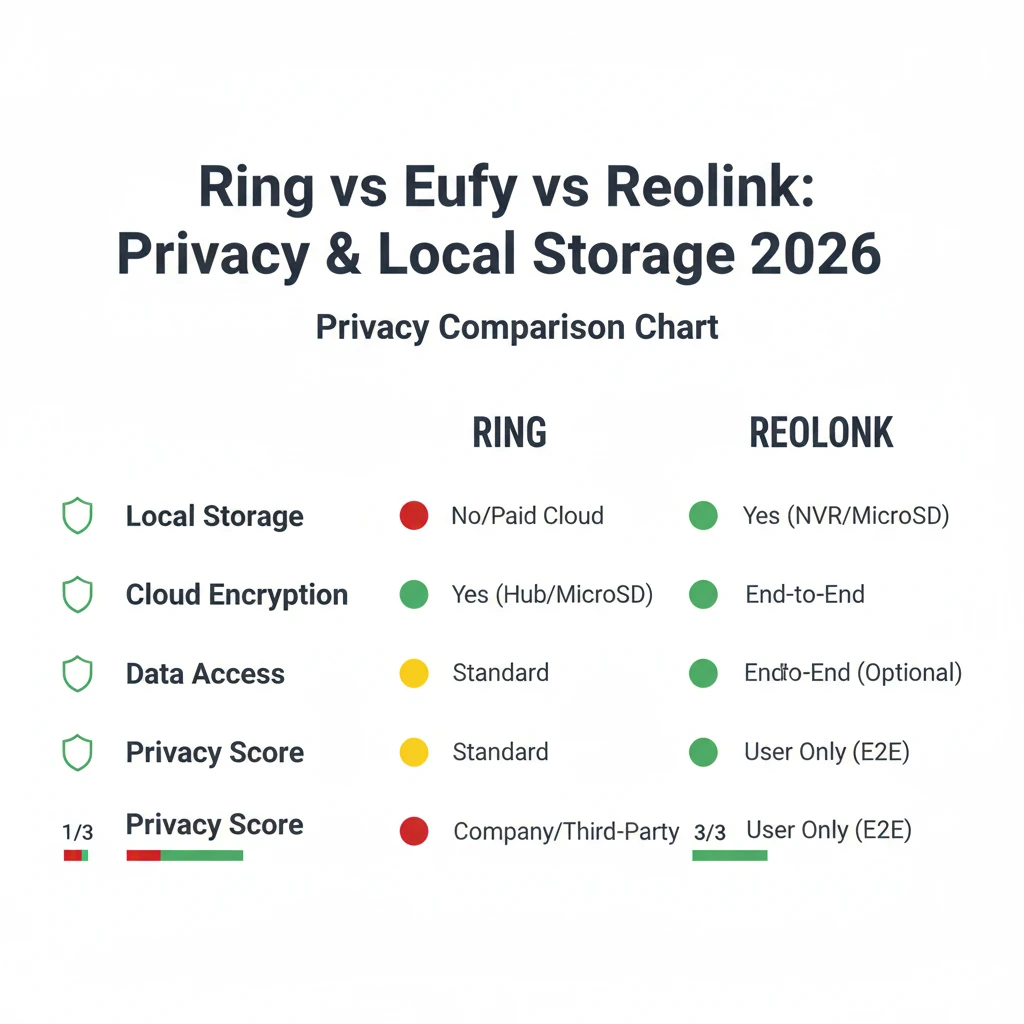
Privacy score comparison: Ring vs Eufy vs Reolink
| Product | Cloud required | Local storage | Mandatory account | Offline control | Score / 10 |
|---|---|---|---|---|---|
| Reolink | No | NVR/SD | No | Excellent | 9.2 |
| Eufy | No | microSD/USB | No | Excellent | 9.0 |
| Ring | Yes | Cloud | Yes | Limited | 5.5 |
Local Control and Offline Reliability
Local control and offline reliability are essential for users who want to ensure their security systems remain functional without internet connectivity. Ring, Eufy, and Reolink offer different levels of local control, impacting their offline capabilities. Ring’s reliance on cloud services means that its cameras require an internet connection for full functionality, limiting their offline reliability1. Although Ring offers an Edge local storage option, it requires a subscription, which may not appeal to privacy-focused users3.
Eufy, however, excels in providing local control through its on-device AI and microSD storage. This setup allows users to access their footage and receive notifications without needing an internet connection2. While some Eufy models are app-dependent, they still offer a higher degree of offline reliability compared to Ring. Reolink stands out with its robust offline capabilities, offering NVR and PoE options that ensure continuous recording and access even without Wi-Fi1. This makes Reolink an ideal choice for those who prioritize offline reliability.
The differences in local control and offline reliability among these brands highlight the importance of understanding your specific needs. For users who require a security system that functions independently of internet connectivity, Reolink and Eufy are superior choices over Ring. Their emphasis on local storage and control ensures that users can maintain security and privacy without relying on external services.
| Brand | Storage | Offline | Hub Required |
|---|---|---|---|
| Reolink | NVR, SD, PoE | Full | NVR for multi-cam |
| Eufy | microSD, USB | Full | No |
| Ring | Cloud (Edge optional) | Limited | No |
Total Cost of Ownership: Evaluating Long-Term Expenses
When considering a security camera system, it’s crucial to evaluate the total cost of ownership (TCO), which includes both hardware and subscription fees over time. Ring, Eufy, and Reolink have different pricing models that impact their long-term affordability. Ring’s cameras typically cost between $100 and $200, with an additional subscription fee of $3.99 to $11.99 per month for cloud storage and video history3[^4]. This subscription model can significantly increase the TCO over three years, making Ring a more expensive option in the long run.
Eufy and Reolink, on the other hand, offer more cost-effective solutions. Both brands provide cameras priced around $100 to $150, with no mandatory subscription fees for local storage12. This results in a lower TCO, as users only need to invest in expandable storage options, such as microSD cards or NVRs, which are one-time expenses. For example, a Reolink NVR costs approximately $200, but it eliminates the need for ongoing subscription fees1.
| Brand | Hardware | Subscription | TCO (3 years) |
|---|---|---|---|
| Ring | $100–200 | $4–12/mo | ~$244–632 |
| Eufy | $100–150 | None | $100–150 |
| Reolink | $100–200 + NVR | None | $150–400 |
The differences in TCO among these brands highlight the importance of considering both initial and long-term costs when selecting a security camera system. For budget-conscious users, Eufy and Reolink offer more affordable solutions without compromising on privacy or functionality. Their emphasis on local storage and control ensures that users can maintain security and privacy without incurring additional expenses.
Product Ecosystem and Integration
The integration of security cameras into a broader smart home ecosystem is an important consideration for many users. Ring, Eufy, and Reolink each offer different levels of compatibility with popular smart home platforms, impacting their overall functionality and user experience. Ring, as part of the Amazon ecosystem, seamlessly integrates with Alexa and other Amazon devices, providing a cohesive smart home experience for users already invested in this ecosystem3. However, this integration comes at the cost of increased cloud dependency and potential privacy concerns1.
Eufy offers compatibility with multiple smart home platforms, including Siri, Alexa, and Google Assistant2. This flexibility allows users to integrate Eufy cameras into a variety of smart home setups, enhancing their overall functionality. Eufy’s local AI processing and privacy zones further improve its integration by reducing the need for cloud-based data analysis2. Reolink, while not as widely compatible as Eufy, offers integration with Home Hub for multi-camera local access1. This setup provides a robust local control solution for users who prioritize privacy and offline reliability.
The differences in product ecosystem and integration among these brands highlight the importance of considering your existing smart home setup when selecting a security camera system. For users already invested in the Amazon ecosystem, Ring may offer the most seamless integration. However, for those who prioritize privacy and local control, Eufy and Reolink provide more flexible and secure options.
Checklist
- Evaluate your privacy needs and prioritize local storage options.
- Consider the importance of offline reliability for your security system.
- Calculate the total cost of ownership, including hardware and subscription fees.
- Assess the compatibility of each brand with your existing smart home ecosystem.
- Prioritize security cameras that offer robust local control and minimal cloud dependency.
Setup Complexity and User Support
The ease of setup and the level of user support required are important factors to consider when selecting a security camera system. Ring, Eufy, and Reolink each offer different levels of setup complexity and support, impacting the overall user experience. Ring is known for its easy DIY app setup, making it accessible for users with minimal technical expertise3. However, its subscription-locked advanced features, such as rich notifications, can increase the support burden for users who require full functionality3.
Eufy offers a simple plug-and-play setup, with local AI reducing false alerts and minimizing the need for extensive user support2. This user-friendly approach makes Eufy an attractive option for those seeking a hassle-free security solution. Reolink, while offering more robust local control, requires a moderate level of setup complexity, particularly for NVR and PoE configurations1. However, once set up, Reolink provides strong offline performance and minimal ongoing support requirements.
The differences in setup complexity and user support among these brands highlight the importance of considering your technical expertise and support needs when selecting a security camera system. For users seeking a straightforward setup with minimal support requirements, Eufy is an excellent choice. However, for those who prioritize robust local control and offline reliability, Reolink offers a more comprehensive solution.
FAQ
Frequently Asked Questions
Which security camera offers the best privacy in 2026?
Reolink and Eufy are the best options for privacy in 2026, offering robust local storage and minimal cloud dependency.
Do I need a subscription for Eufy or Reolink cameras?
No, both Eufy and Reolink offer local storage options without mandatory subscription fees, reducing long-term costs.
Can I use Ring cameras without an internet connection?
Ring cameras require an internet connection for full functionality, limiting their offline reliability compared to Eufy and Reolink.
How do Eufy and Reolink handle data privacy?
Eufy and Reolink prioritize local storage and control, ensuring that only users have access to their footage, aligning with zero-knowledge principles.
What is the total cost of ownership for these cameras over three years?
Ring’s TCO is approximately $380 due to subscription fees, while Eufy and Reolink have a lower TCO of around $150, as they do not require subscriptions.
Primary Sources Table
| Index | Title/Description | Direct URL |
|---|---|---|
| [1] | Ring, Reolink, Eufy, Defender — Which Cameras Can You Trust? (YouTube, privacy tests, local storage scores) | https://www.youtube.com/watch?v=P4VJsyDvaZo |
| [2] | Which Video Doorbell Should You Buy in 2026? (6-Way Comparison) (YouTube, Ring/Eufy settings) | https://www.youtube.com/watch?v=sTe9xDYniZ0 |
| [3] | Ring vs. Eufy (2026): Privacy Risks, Hidden Costs & The “Warrantless” (ModemGuides blog) | https://www.modemguides.com/blogs/modemguides-blog/ring-vs-eufy-privacy-comparison-2026 |
| [4] | Best Home Security Cameras of 2026 (Security.org, specs, pricing) | https://www.security.org/security-cameras/best/ |
| [5] | Reolink vs Eufy: Ultimate Security Camera Comparison (2026 Guide) (Sipko Security) | https://sipkosecurity.com/reolink-vs-eufy-security-camera-comparison-2026/ |
Conclusion
In conclusion, the choice between Ring, Eufy, and Reolink security cameras in 2026 largely depends on your privacy needs, budget, and integration preferences. While Ring offers seamless integration with the Amazon ecosystem, its reliance on cloud storage raises privacy concerns. Eufy and Reolink, on the other hand, provide robust local storage options and offline reliability, making them superior choices for privacy-conscious users. By prioritizing local control and minimizing cloud dependency, Eufy and Reolink ensure that users can maintain security and privacy without incurring additional expenses.
For further reading, explore our guides on Apple HomeKit Secure Video vs Local NVR for Privacy, Best Local Storage Security Cameras Without Subscription 2026, and Best Open Source Smart Home Software for Privacy Advocates.
Footnotes
-
Ring, Reolink, Eufy, Defender — Which Cameras Can You Trust? (YouTube, privacy tests, local storage scores) ↩ ↩2 ↩3 ↩4 ↩5 ↩6 ↩7 ↩8 ↩9 ↩10
-
Reolink vs Eufy: Ultimate Security Camera Comparison (2026 Guide) (Sipko Security) ↩ ↩2 ↩3 ↩4 ↩5 ↩6 ↩7
-
Which Video Doorbell Should You Buy in 2026? (6-Way Comparison) (YouTube, Ring/Eufy settings) ↩ ↩2 ↩3 ↩4 ↩5