Smart Home Privacy
Smart Appliances Privacy: Risks and Solutions 2026
Explore privacy risks of IoT smart appliances like fridges and washers, with 2026 insights on data security and local control.
Quick answer:
Executive Summary
As we advance into 2026, smart appliances such as connected fridges, washers, and dryers are becoming increasingly integrated into our homes. These devices offer convenience and efficiency but also introduce significant privacy risks. The primary concerns revolve around data collection, security vulnerabilities, and the potential for breaches. Understanding these risks is crucial for making informed decisions about purchasing and using smart appliances.
The bottom line is that while smart appliances offer many benefits, they come with privacy risks that require careful consideration and proactive mitigation strategies. By prioritizing local control and offline reliability, you can better protect your data and privacy.
Understanding Privacy Risks in Smart Appliances
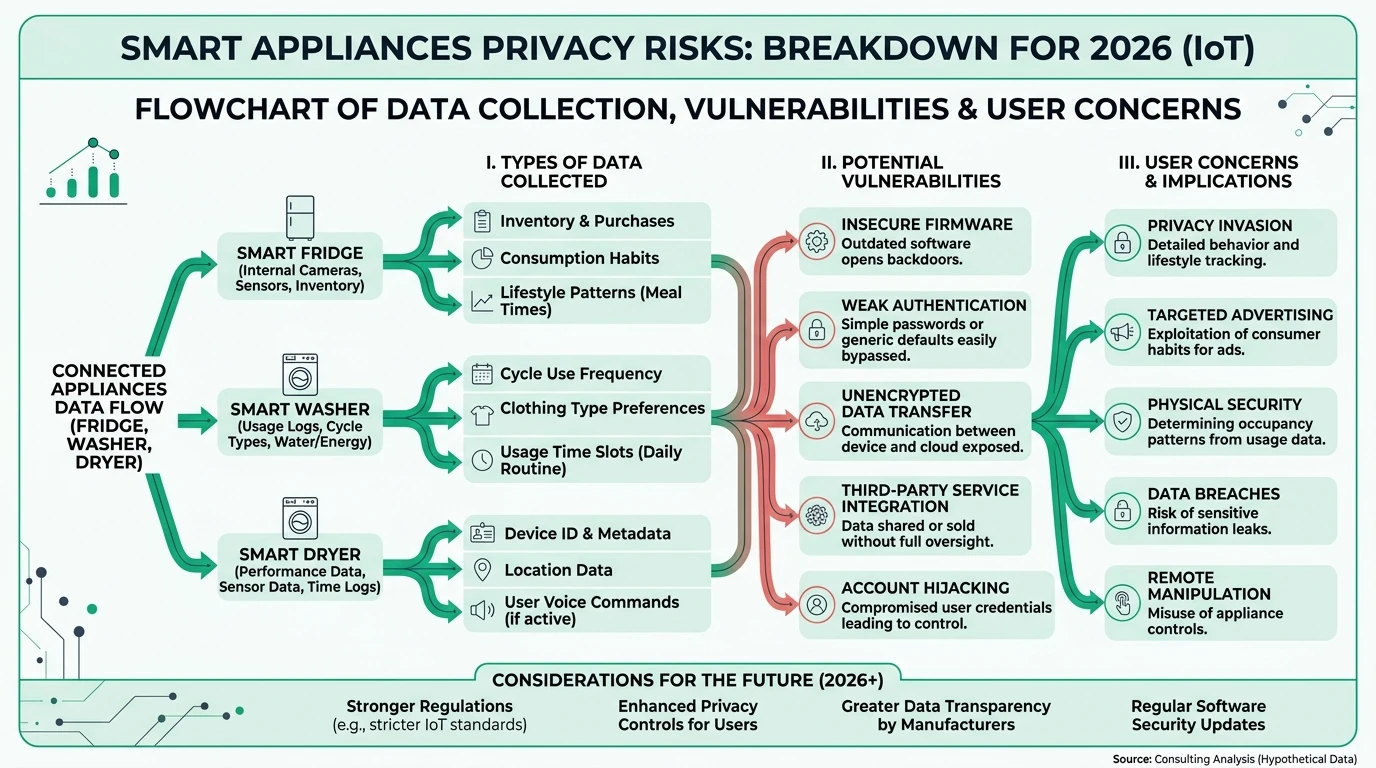
Smart appliances collect a vast amount of data to function effectively. This data includes usage patterns, personal preferences, and even location information. For instance, a connected fridge might track your dietary habits, while a smart washer could log your laundry schedule. These data points are often shared with third parties, raising significant privacy concerns1.
In 2026, the landscape of privacy risks has evolved with the integration of AI and biometrics in appliances. These technologies can infer sensitive information, such as health data from your laundry habits or energy usage patterns. The potential for misuse of this data is high, especially if it falls into the hands of advertisers or malicious actors2.
To mitigate these risks, it’s essential to understand the privacy policies of your smart appliances. Many devices operate under policies that allow extensive data sharing, often without explicit user consent. Ensuring that your devices comply with regulations like GDPR and CCPA can help protect your privacy. These regulations mandate transparency and give you the right to opt-out of data collection3.
Local Control and Offline Reliability
Local control refers to the ability to operate smart appliances without relying on cloud services. This feature is crucial for maintaining privacy, as it limits the amount of data sent to external servers. In 2026, the Matter protocol has emerged as a standard for enabling local control, allowing devices to communicate directly with each other without the need for internet connectivity4.
Offline reliability is another critical factor. Many smart appliances are designed to function optimally only when connected to the internet. However, this dependency poses a risk if your internet connection fails. Devices that offer robust offline functionality ensure that basic operations continue uninterrupted, protecting you from potential data breaches during connectivity lapses5.
When selecting smart appliances, prioritize those that support local control and offline reliability. This approach not only enhances privacy but also reduces the risk of service disruptions. Look for devices that explicitly advertise these features and verify their compliance with privacy standards6.
Total Cost of Ownership: Hidden Costs and Breaches
The total cost of ownership (TCO) for smart appliances extends beyond the initial purchase price. In 2026, consumers must consider ongoing expenses such as subscription fees for cloud services and potential costs associated with data breaches. For example, a smart fridge might require a monthly fee for advanced features like predictive maintenance7.
Data breaches represent a significant hidden cost. If your appliance’s data is compromised, you could face financial liabilities, especially under regulations like BIPA, which impose penalties for privacy violations. Additionally, the cost of repairing or replacing compromised devices can be substantial8.
To minimize these costs, evaluate the long-term financial implications of owning smart appliances. Consider opting for devices that offer offline capabilities, as they typically incur fewer ongoing expenses. By doing so, you can enjoy the benefits of smart technology without the burden of excessive costs9.
Security and Privacy Implications in 2026
Security vulnerabilities in smart appliances are a growing concern. In 2026, many devices still suffer from weak security measures, such as outdated software and inadequate encryption. These vulnerabilities can be exploited by hackers to gain unauthorized access to your data10.
Privacy implications are equally significant. The integration of AI in smart appliances has increased the potential for data misuse. AI algorithms can process vast amounts of data, making it easier for companies to profile users and target them with personalized ads. This practice raises ethical questions about consent and data ownership11.
To safeguard your privacy, it’s crucial to implement robust security measures. Regularly update your appliances’ software to patch vulnerabilities and consider using a VPN to encrypt your internet traffic. Additionally, disable unnecessary features that require data sharing and review privacy settings to ensure they align with your preferences12.
Setup Complexity and Support Burden
Setting up smart appliances can be a complex process, often requiring technical expertise. In 2026, many devices still demand app pairing and account linking, which can be daunting for less tech-savvy users. This complexity increases the support burden, as users may need assistance with troubleshooting and configuration13.
The support burden is exacerbated by irregular software updates, which can leave devices vulnerable to security threats. Users must be proactive in managing updates and ensuring their appliances are running the latest software versions. This responsibility can be overwhelming, especially for those unfamiliar with technology14.
To ease the setup process, choose appliances with user-friendly interfaces and comprehensive support resources. Manufacturers that offer detailed guides and responsive customer service can significantly reduce the complexity of managing smart appliances15.
Checklist
- Verify device compliance with privacy regulations
- Enable local control features
- Regularly update software
- Use VPN for internet-connected devices
- Review and adjust privacy settings
Price Model and Hidden Costs
The price model for smart appliances in 2026 includes both upfront costs and ongoing expenses. While the initial purchase price of a smart fridge or washer might seem reasonable, additional costs such as subscription fees for cloud features can quickly add up. These fees typically range from $5 to $10 per month, depending on the services offered16.
Hidden costs also include potential expenses related to data breaches. If your appliance’s data is compromised, you may face financial liabilities, particularly if you are subject to privacy regulations like BIPA. Additionally, the cost of repairing or replacing compromised devices can be significant17.
To manage these costs, consider the long-term financial implications of owning smart appliances. Opt for devices that offer offline capabilities, as they generally incur fewer ongoing expenses. By doing so, you can enjoy the benefits of smart technology without the burden of excessive costs18.
FAQ
Frequently Asked Questions
What are the main privacy risks of smart appliances?
Smart appliances collect and share data, including usage patterns and personal preferences, with third parties. This data can be misused for targeted advertising or fall into the hands of malicious actors.
How can I ensure my smart appliances are secure?
Regularly update your appliances’ software, use a VPN to encrypt internet traffic, and disable unnecessary data-sharing features to enhance security.
What is local control, and why is it important?
Local control allows smart appliances to operate without relying on cloud services, reducing data sharing and enhancing privacy.
Are there hidden costs associated with smart appliances?
Yes, hidden costs include subscription fees for cloud services and potential expenses from data breaches or device replacements.
What should I consider when buying a smart appliance?
Consider privacy features, local control options, offline reliability, and total cost of ownership, including hidden costs and subscription fees.
Primary Sources Table
| Index | Title/Description | Direct URL |
|---|---|---|
| 1 | Privacy Risks in Smart Home Apps: A Closer Look at Data Collection | Link |
| 2 | The hidden privacy risks of smart homes & IoT devices - TyN Magazine | Link |
| 3 | Data Privacy in Smart Homes: Challenges and Opportunities | Link |
| 4 | Top 10 Privacy, AI & Cybersecurity Issues for 2026 | Link |
| 5 | Data privacy day US 2026: How concerned are Americans about data security | Link |
| 6 | 150 Data Privacy Statistics For 2026 You Need To Know About | Link |
| 7 | New research reveals alarming privacy and security threats in Smart Homes | Link |
| 8 | Dominate IoT data privacy: Strong safeguards for connected devices in 2026 | Link |
Conclusion
In conclusion, smart appliances offer numerous benefits but also pose significant privacy and security risks. By understanding these risks and implementing effective mitigation strategies, you can enjoy the advantages of smart technology while protecting your privacy. Prioritize devices that offer local control and offline reliability, and stay informed about the latest privacy regulations and standards.
Footnotes
-
Privacy Risks in Smart Home Apps: A Closer Look at Data Collection ↩
-
The hidden privacy risks of smart homes & IoT devices - TyN Magazine ↩
-
Data Privacy in Smart Homes: Challenges and Opportunities ↩
-
Dominate IoT data privacy: Strong safeguards for connected devices in 2026 ↩
-
New research reveals alarming privacy and security threats in Smart Homes ↩
-
150 Data Privacy Statistics For 2026 You Need To Know About ↩
-
Top 10 Privacy, AI & Cybersecurity Issues for 2026 ↩
-
Data privacy day US 2026: How concerned are Americans about data security ↩
-
Dominate IoT data privacy: Strong safeguards for connected devices in 2026 ↩
-
Privacy Risks in Smart Home Apps: A Closer Look at Data Collection ↩
-
The hidden privacy risks of smart homes & IoT devices - TyN Magazine ↩
-
Data Privacy in Smart Homes: Challenges and Opportunities ↩
-
New research reveals alarming privacy and security threats in Smart Homes ↩
-
150 Data Privacy Statistics For 2026 You Need To Know About ↩
-
Dominate IoT data privacy: Strong safeguards for connected devices in 2026 ↩
-
Top 10 Privacy, AI & Cybersecurity Issues for 2026 ↩
-
Data privacy day US 2026: How concerned are Americans about data security ↩
-
Dominate IoT data privacy: Strong safeguards for connected devices in 2026 ↩