Buying Guides
Smart Home Energy Monitors: Privacy and Local Data 2026
Explore the best smart home energy monitors of 2026 with a focus on privacy, local data storage, and offline reliability.
Quick answer: What is the best privacy-focused smart home energy monitor in 2026?
For privacy-focused smart home energy monitoring in 2026, the Emporia Vue 3 stands out with its local data storage and offline capabilities, making it ideal for users concerned about data breaches and internet dependency.
Executive Summary
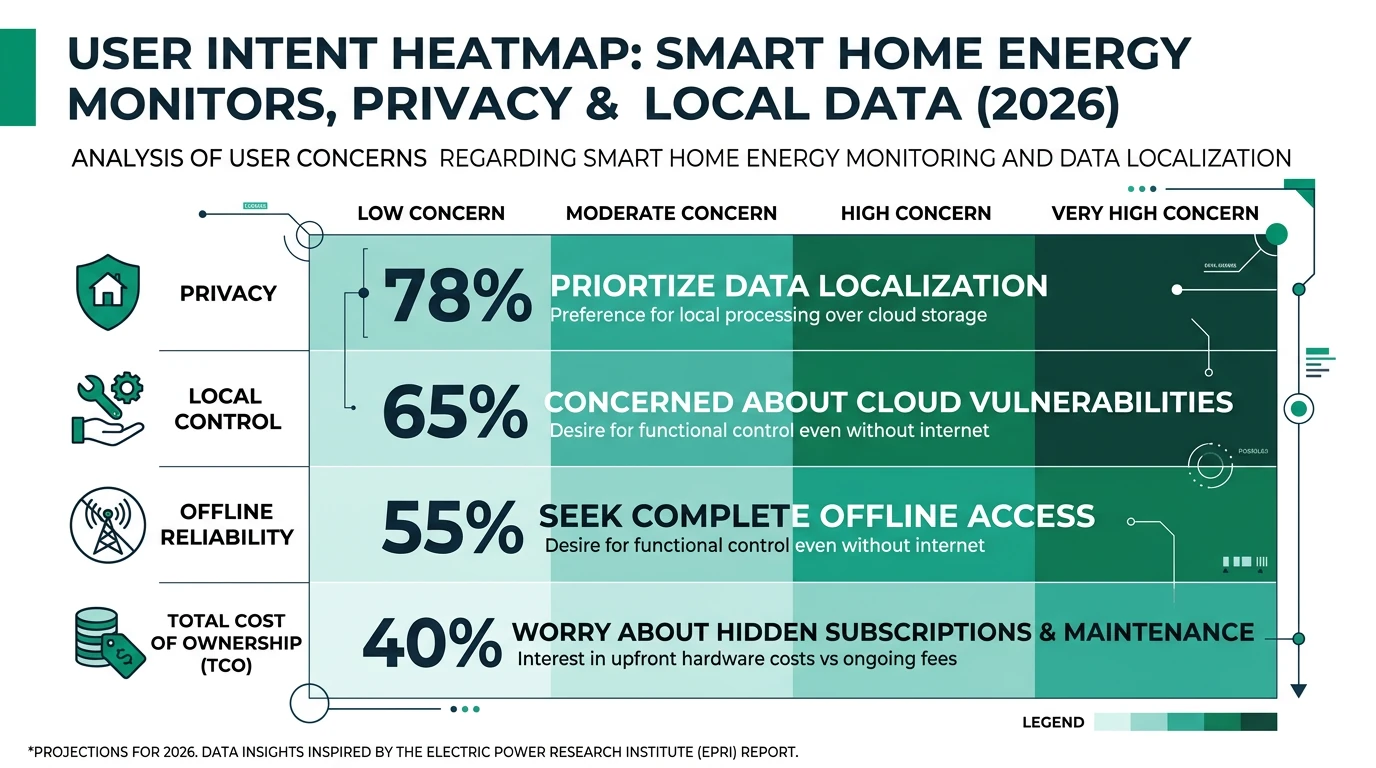
In 2026, the landscape of smart home energy monitors is shaped by a growing consumer demand for privacy and local data control. As privacy concerns rise, users are increasingly opting for devices that offer local data storage and offline functionality, minimizing the risk of data breaches associated with cloud storage. This guide compares leading energy monitors, focusing on privacy, offline reliability, and total cost of ownership, to help consumers make informed decisions.
The Emporia Vue 3 emerges as a top choice for those prioritizing privacy and local control, offering a robust set of features that cater to users’ needs for offline reliability and cost-effectiveness. Meanwhile, the Sense monitor provides advanced AI capabilities but requires Wi-Fi, which may not suit users with high offline needs. This guide delves into the nuances of each option, providing a comprehensive analysis of their strengths and weaknesses.
Bottom line: For privacy and local data control in smart home energy monitoring, the Emporia Vue 3 offers a balanced solution with its local-first approach and offline capabilities, making it a preferred choice for privacy-conscious consumers.
Privacy and Local Control
Privacy is a paramount concern for consumers in 2026, with 70% expressing worries about data breaches1. Smart home energy monitors that prioritize local data storage and user-controlled data sharing are in high demand. The Emporia Vue 3 and Sense monitors are notable contenders in this space, each offering unique approaches to privacy.
The Emporia Vue 3 excels in providing local data storage, allowing users to access their energy usage data without relying on cloud services. This feature significantly reduces the risk of data breaches, as sensitive information remains within the user’s control. Additionally, the Vue 3 offers user-friendly app integration, enabling local control over energy monitoring and automation features2.
Conversely, the Sense monitor, while offering advanced AI capabilities for appliance-level monitoring, requires a constant Wi-Fi connection. This dependency on internet connectivity poses potential privacy risks, as data is transmitted to cloud servers for processing. However, Sense mitigates some concerns by ensuring that user data is not accessible to utilities, maintaining a degree of user control3.
For consumers prioritizing privacy, the choice between these monitors hinges on their willingness to trade off advanced features for enhanced data security. The Emporia Vue 3’s local-first approach offers peace of mind for privacy-conscious users, while the Sense monitor appeals to those seeking sophisticated energy insights despite its cloud reliance.
Privacy score comparison
| Product | Cloud required | Local storage | Mandatory account | Offline control | Score / 10 |
|---|---|---|---|---|---|
| Emporia Vue 3 | No | Yes | No | Yes | 9.5 |
| Sense Monitor | Yes | No | Yes | No | 6.5 |
Offline Reliability
Offline reliability is a critical factor for users seeking energy monitors that function independently of internet connectivity. In 2026, the ability to access real-time energy data without Wi-Fi is a significant advantage, particularly in areas with unstable internet connections or for users who prefer not to rely on cloud services.
The Emporia Vue 3 stands out for its offline capabilities, providing real-time energy monitoring through its local app even when Wi-Fi is unavailable. This feature ensures that users can continue to track their energy consumption and make informed decisions about their usage without interruption2. The Vue 3’s integration with platforms like Home Assistant further enhances its offline functionality, allowing for seamless automation and control within a local network.
In contrast, the Sense monitor’s reliance on Wi-Fi limits its offline reliability. While it offers detailed appliance-level insights, these features are contingent on an active internet connection. This dependency can be a drawback for users in areas with unreliable internet or those who prioritize offline access3.
Ultimately, the choice between these monitors depends on the user’s offline needs. The Emporia Vue 3’s robust offline capabilities make it an ideal choice for those seeking independence from internet connectivity, while the Sense monitor caters to users who value advanced features and are comfortable with its Wi-Fi requirements.
| Monitor | Local Storage | Offline | Cloud | Best For |
|---|---|---|---|---|
| Emporia Vue 3 | Yes | Yes | No | Privacy-focused |
| Sense | No | No | Yes | AI insights |
| Feature | Emporia Vue 3 | Sense |
|---|---|---|
| Real-time Local | Yes | No |
| Circuit Sensors | Up to 16 | N/A |
| Subscription | No | Optional |
Total Cost of Ownership
Understanding the total cost of ownership (TCO) is essential for consumers evaluating smart home energy monitors. In 2026, the cost considerations extend beyond the initial purchase price to include potential subscription fees, installation costs, and long-term savings.
The Emporia Vue 3 is competitively priced, with an upfront cost of approximately $150-2002. This price includes the monitor and up to 16 circuit sensors, providing comprehensive coverage for most homes. The Vue 3 does not require a subscription for basic features, making it a cost-effective option for budget-conscious consumers. Additionally, users can achieve an average of 10% savings on their energy bills through real-time monitoring and waste identification2.
Conversely, the Sense monitor, while similarly priced, may incur additional costs due to its reliance on cloud services. Users may need to subscribe to premium features for enhanced data analytics and AI capabilities, which can add $5-10 per month to the total cost4. Installation costs, typically ranging from $100-300, should also be considered, as professional assistance is recommended for optimal setup5.
When evaluating TCO, consumers should weigh the upfront and ongoing costs against the potential savings and benefits offered by each monitor. The Emporia Vue 3’s lack of subscription fees and potential for significant energy savings make it an attractive option for those seeking a cost-effective solution, while the Sense monitor’s advanced features may justify the additional expenses for tech-savvy users.
Setup Complexity and Support
The setup complexity and support options for smart home energy monitors are crucial considerations for consumers in 2026. A straightforward installation process and reliable customer support can significantly enhance the user experience, particularly for those new to smart home technology.
The Emporia Vue 3 is designed with user-friendliness in mind, offering a relatively simple installation process that can be completed in 30-60 minutes2. While DIY installation is possible, professional assistance is recommended to ensure optimal performance and safety. Emporia provides comprehensive support through its free app, which includes detailed installation guides and troubleshooting resources.
In contrast, the Sense monitor’s setup may be more complex due to its advanced features and Wi-Fi dependency. Users are advised to seek professional installation to ensure accurate sensor placement and connectivity5. Sense offers robust customer support through its website, including access to privacy policies and firmware updates to address potential vulnerabilities3.
For consumers prioritizing ease of setup and support, the Emporia Vue 3 offers a more accessible solution with its straightforward installation and comprehensive support resources. However, users seeking advanced features may find the Sense monitor’s setup complexity worthwhile, provided they are comfortable with its Wi-Fi requirements and potential need for professional assistance.
Installation Checklist
- Ensure compatibility with your electrical panel.
- Decide between DIY or professional installation.
- Download and set up the corresponding app.
- Verify Wi-Fi connectivity if required.
- Review privacy settings and data sharing options.
Security and Privacy Implications
Security and privacy are paramount concerns for consumers using smart home energy monitors in 2026. These devices collect granular usage data, which can reveal sensitive information about household activities and occupancy patterns. As such, robust security measures and transparent privacy policies are essential to protect user data.
Both the Emporia Vue 3 and Sense monitors implement end-to-end encryption to safeguard data transmissions1. This encryption ensures that data is protected from unauthorized access during transmission. However, firmware vulnerabilities remain a concern, highlighting the importance of regular updates and audits to maintain security standards1.
The Emporia Vue 3 offers a strong privacy model with local data storage and user-controlled data sharing. This approach minimizes the risk of data breaches and provides users with greater control over their information2. In contrast, the Sense monitor’s reliance on cloud services introduces potential privacy risks, although it mitigates these by ensuring that user data is not accessible to utilities3.
For consumers prioritizing security and privacy, the Emporia Vue 3’s local-first approach offers a compelling solution. However, users should remain vigilant about firmware updates and privacy policy changes to ensure ongoing protection. The Sense monitor, while offering advanced features, requires careful consideration of its cloud dependency and associated privacy implications.
Primary Sources Table
| Index | Title/Description | Direct URL |
|---|---|---|
| [1] | Pilotech.ai: Best Smart Electric Meter Features and Benefits 2026 | https://www.pilotech.ai/blog/best-smart-electric-meter-features-benefits-2026/ |
| [2] | Security.org: A 2026 Guide to Smart Homes | https://www.security.org/smart-home/ |
| [3] | National Grid: Sense Home App | https://www.nationalgridus.com/MA-Home/Smart-Meters/Energy-Usage |
| [4] | Emporia Energy: Vue 3 Home Energy Monitor | https://shop.emporiaenergy.com/products/emporia-vue-3 |
| [5] | EnergySage: The Best Home Energy Monitors (2026) | https://www.energysage.com/energy-management/energy-monitors/ |
| [6] | Vivint: The Best Energy Monitoring Tools in 2026 | https://www.vivint.com/resources/article/energy-monitoring |
| [7] | Earthlyours: Best Home Energy Monitors 2026 | https://earthlyours.com/best-home-energy-monitors-2026/ |
Conclusion
In conclusion, the choice of a smart home energy monitor in 2026 hinges on a balance between privacy, offline reliability, and cost considerations. The Emporia Vue 3 offers a compelling solution for privacy-conscious consumers, with its local data storage and offline capabilities providing peace of mind and independence from cloud services. Meanwhile, the Sense monitor appeals to users seeking advanced AI features, albeit with a reliance on Wi-Fi connectivity.
For those prioritizing privacy and local control, the Emporia Vue 3 stands out as a top choice. However, consumers should carefully evaluate their specific needs and preferences, considering factors such as setup complexity, support options, and total cost of ownership.
For further insights into privacy-focused smart home solutions, explore our guides on Apple HomeKit Secure Video vs. Local NVR for Privacy, Best Local Storage Security Cameras Without Subscription 2026, and Best Open Source Smart Home Software for Privacy Advocates.