Buying Guides
Top Smart Pet Feeders Without Cloud 2026
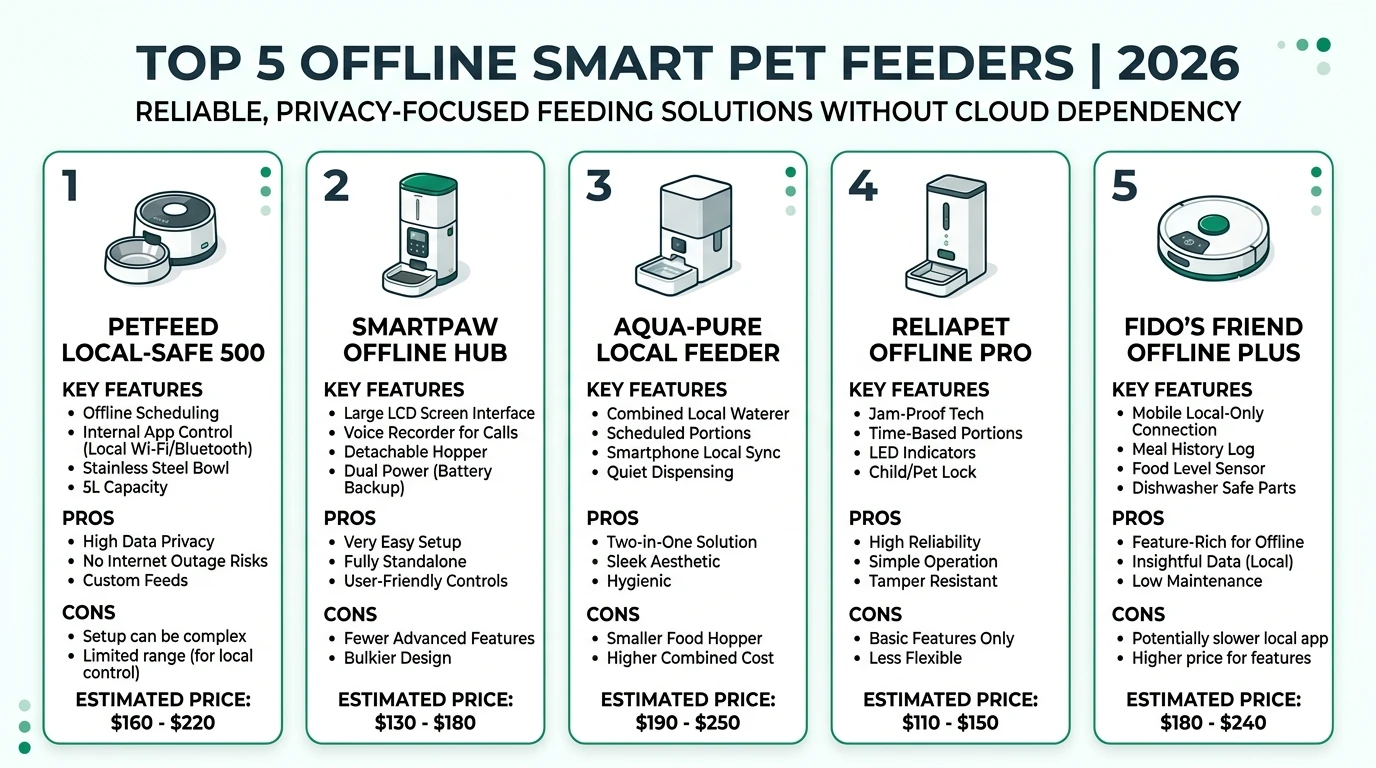
Explore the best smart pet feeders of 2026 that operate without cloud dependency, ensuring privacy and reliability.
Quick answer:
Executive Summary
In 2026, the demand for smart pet feeders that operate without cloud dependency has surged, driven by privacy concerns and the need for reliable, offline functionality. These feeders offer features such as scheduling, portion control, and multi-pet access without relying on internet connectivity. This guide explores the best options available, focusing on devices that prioritize local control, offline reliability, and cost-effectiveness.
The bottom line: For pet owners prioritizing privacy and reliability, non-cloud smart pet feeders like the Cat Mate C500 provide an excellent balance of functionality and cost.
Why Choose a Non-Cloud Smart Pet Feeder?
Choosing a smart pet feeder without cloud dependency is increasingly popular among pet owners who value privacy and reliability. These feeders operate independently of the internet, using hardware timers and local controls to manage feeding schedules. This eliminates the risk of data breaches and ensures that your pet’s feeding routine is not disrupted by internet outages.
One of the primary advantages of non-cloud feeders is their enhanced privacy. Since these devices do not connect to the internet, there is no risk of your pet’s data being transmitted or stored in the cloud. This is particularly important for pet owners concerned about data security and privacy.
Moreover, offline feeders are often more reliable than their cloud-based counterparts. They are not susceptible to connectivity issues, which can disrupt feeding schedules. Many models come with battery backups, ensuring that they continue to function even during power outages.
In terms of cost, non-cloud feeders are generally more economical in the long run. They do not require app subscriptions or ongoing fees, making them a cost-effective choice for budget-conscious pet owners. The initial investment is typically lower, and maintenance costs are minimal, with no need for frequent software updates or troubleshooting.
Overall, non-cloud smart pet feeders offer a practical solution for pet owners who want to ensure their pets are fed reliably and securely, without the complications and risks associated with cloud connectivity.
Key Features of Top Non-Cloud Pet Feeders
When evaluating non-cloud smart pet feeders, several key features should be considered to ensure you select the best option for your needs. These features include local control, offline reliability, and total cost of ownership (TCO).
Local control is a critical feature, allowing you to set feeding schedules directly on the device without needing an app or internet connection. This is typically achieved through hardware timers or electronic dials, which can be programmed to dispense food at specific times.
Offline reliability is another important consideration. Look for models with dual power options, such as AC adapters and battery backups, to ensure continuous operation during power outages. Some feeders also include sensors to prevent food jams, further enhancing their reliability.
The total cost of ownership is an essential factor for many pet owners. Non-cloud feeders generally have a lower upfront cost compared to cloud-based models, and they do not incur ongoing subscription fees. Maintenance costs are also lower, as there are no software updates or app-related issues to address.
To help you make an informed decision, here is a table comparing key features of top non-cloud pet feeders:
| Feature | Description |
|---|---|
| Local Control | Hardware timers for scheduling; no app required |
| Offline Reliability | Dual power options; sensors to prevent jams |
| Cost | Lower upfront cost; no subscription fees; minimal maintenance costs |
By focusing on these features, you can select a non-cloud smart pet feeder that meets your needs and provides reliable, secure feeding for your pet.
Privacy and Security Considerations
Privacy and security are paramount when selecting a smart pet feeder, especially one that operates without cloud connectivity. Non-cloud feeders inherently offer superior privacy, as they do not transmit data over the internet. This eliminates the risk of data breaches and unauthorized access to your pet’s feeding schedule.
Local control is a significant advantage of non-cloud feeders. These devices operate independently of the internet, using hardware timers or local apps that do not require cloud connectivity. This ensures that your pet’s data remains secure and private, with no risk of it being accessed or shared online.
Security is further enhanced by the use of RFID technology in some models, such as the SureFeed Microchip feeder. These feeders use pet-specific tags to control access, ensuring that only your pet can access the food. This not only enhances security but also prevents food theft by other pets.
While non-cloud feeders offer significant privacy and security benefits, it’s important to consider the reliability of the hardware. Look for models with robust construction and reliable components to ensure long-term performance. Additionally, consider the availability of customer support and warranty options to address any potential issues.
By prioritizing privacy and security, you can select a non-cloud smart pet feeder that provides peace of mind and reliable feeding for your pet.
Setup and Maintenance: What to Expect
Setting up a non-cloud smart pet feeder is typically straightforward, with most models requiring only a few minutes to configure. These feeders often use hardware timers or electronic dials for scheduling, eliminating the need for app pairing or internet connectivity.
The setup process generally involves programming the feeding schedule directly on the device. This can usually be done in 5-10 minutes, depending on the complexity of the feeder. Some models, like the PetSafe timer-based feeders, offer simple button or dial programming, making them easy to set up and adjust as needed.
Maintenance for non-cloud feeders is minimal compared to cloud-based models. There are no software updates or app-related issues to address, reducing the overall support burden. Most maintenance involves routine cleaning and occasional battery replacement, which can be done quickly and easily.
For multi-pet households, RFID-based feeders may require additional setup time to program individual tags for each pet. However, this process is typically straightforward and only needs to be done once. The ongoing maintenance for these feeders is similar to other non-cloud models, with minimal support required.
Overall, non-cloud smart pet feeders offer a hassle-free setup and maintenance experience, making them an ideal choice for pet owners who want a reliable and easy-to-use feeding solution.
Checklist
- Program feeding schedule directly on device
- Routine cleaning and maintenance
- Battery replacement as needed
- Minimal support required
Cost Analysis: Understanding the Total Cost of Ownership
When considering a non-cloud smart pet feeder, it’s important to understand the total cost of ownership (TCO) to ensure it fits within your budget. These feeders are generally more cost-effective than their cloud-based counterparts, with lower upfront costs and minimal ongoing expenses.
The initial cost of a non-cloud feeder typically ranges from $40 to $150, depending on the features and capacity. For example, the Cat Mate C500, a popular timer-based model, is priced around $80, offering a balance of affordability and functionality.
Ongoing costs for non-cloud feeders are minimal, as there are no subscription fees or app-related expenses. Maintenance costs are limited to occasional battery replacements and routine cleaning, which are relatively inexpensive. Replacement parts, such as seals or desiccant packs, may be needed periodically but are generally low-cost.
To provide a clearer picture of the TCO, here is a table outlining the typical costs associated with non-cloud smart pet feeders:
| Cost Component | Description | Estimated Cost (3 years) |
|---|---|---|
| Initial Purchase | Upfront cost of the feeder | $40 - $150 |
| Maintenance | Battery replacements, cleaning | $10 - $20 per year |
| Replacement Parts | Seals, desiccant packs | $10 - $20 per year |
| Total Cost | Combined cost over 3 years | $100 - $250 |
By understanding the TCO, you can make an informed decision and select a non-cloud smart pet feeder that provides value and reliability without exceeding your budget.
FAQ
Frequently Asked Questions
What is a non-cloud smart pet feeder?
A non-cloud smart pet feeder operates independently of the internet, using hardware timers or local controls to manage feeding schedules without relying on cloud connectivity.
Why choose a non-cloud feeder over a cloud-based one?
Non-cloud feeders offer enhanced privacy, reliability, and cost-effectiveness, as they do not transmit data online and are not affected by internet outages.
How do I set up a non-cloud smart pet feeder?
Setup typically involves programming the feeding schedule directly on the device using hardware timers or electronic dials, taking only a few minutes.
Are there any ongoing costs with non-cloud feeders?
Ongoing costs are minimal, limited to occasional battery replacements and routine maintenance, with no subscription fees or app-related expenses.
Can non-cloud feeders accommodate multiple pets?
Yes, some models use RFID technology to control access for multiple pets, ensuring that each pet receives the correct portion without interference.
Primary Sources Table
| ID | Title/Description | Direct URL |
|---|---|---|
| 1 | 7 Best Automatic Dog Feeders (2026) – Long-Term Reliable | Fetchy Friends |
| 2 | The Best Automatic Pet Feeders of 2026 - Reviewed | Reviewed |
| 3 | Top 5 Best Pet Feeder Automatic 2026 - YouTube | YouTube |
| 4 | The 13 Best Automatic Cat Feeders in 2026 (We Tested Them All) | Cats.com |
| 5 | Best Smart Pet Feeders 2026 – [don’t buy one before watching this] - YouTube | YouTube |
| 6 | The Top 5 Best Timer Dog Feeder in 2026 - Must Watch … - YouTube | YouTube |
| 7 | Smart Pet Feeder Without Wifi: Reliable Feeding Made Easy | Modern Pet Tech |
Conclusion
In conclusion, smart pet feeders without cloud dependency offer a reliable and secure solution for pet owners who prioritize privacy and functionality. By focusing on local control, offline reliability, and cost-effectiveness, these feeders provide peace of mind and ensure that your pet’s feeding schedule is maintained without the risks associated with cloud connectivity.
Explore more about privacy-focused smart home solutions in our related guides on Apple HomeKit Secure Video vs. Local NVR for Privacy, Best Hardware for Local AI Smart Home 2026, and Best Local LLMs for Home Automation 2026.