Comparisons
Smart Water Leak Detectors Without Cloud 2026
Explore top smart water leak detectors that function without cloud dependency, ensuring privacy and reliability.
Quick answer:
Executive Summary
In an era where privacy and data security are paramount, smart water leak detectors that operate without cloud dependency are gaining traction. These devices offer local processing capabilities, ensuring that your data remains within your control. This guide explores the top options available in 2026, focusing on their features, integration capabilities, and privacy benefits. The Guardian Leak Prevention System and Fibaro Flood Sensor are notable mentions, providing robust offline functionality. The bottom line is that choosing a cloud-free water leak detector enhances your home’s privacy while maintaining effective leak detection.
Understanding Cloud-Free Smart Water Leak Detectors
Smart water leak detectors are essential for preventing water damage in homes and businesses. However, many of these devices rely on cloud connectivity, raising concerns about data privacy and security. Cloud-free detectors offer a solution by processing data locally, ensuring that sensitive information does not leave your premises. This section delves into the mechanics of cloud-free detectors, highlighting their advantages and potential limitations.
Cloud-free detectors like the Guardian Leak Prevention System operate independently of the internet, using local networks or direct connections to alert users of leaks. This local processing capability is crucial in maintaining data privacy, as it eliminates the need for data transmission over the internet. Additionally, these systems often continue to function during internet outages, providing reliability in various scenarios.
The Fibaro Flood Sensor, compatible with Apple HomeKit, exemplifies the integration of smart home technology with local processing. HomeKit’s secure framework allows the sensor to communicate with other devices in your home without relying on external servers. This integration not only enhances privacy but also streamlines the user experience by centralizing control within the home environment.
Despite their benefits, cloud-free detectors may face limitations in terms of remote accessibility and feature updates. Without cloud connectivity, accessing device data from outside the home can be challenging, and firmware updates may require manual intervention. However, for users prioritizing privacy and data security, these trade-offs are often acceptable.
In summary, cloud-free smart water leak detectors provide a viable alternative for those seeking enhanced privacy and reliability. By understanding their operation and integration capabilities, you can make informed decisions about incorporating these devices into your smart home ecosystem.
Key Features of Cloud-Free Water Leak Detectors
When selecting a smart water leak detector that operates without cloud dependency, it’s essential to consider the key features that differentiate these devices. This section outlines the critical attributes to look for, ensuring that you choose a detector that meets your privacy and functionality needs.
One of the primary features of cloud-free detectors is local processing capability. Devices like the Guardian Leak Prevention System are designed to function independently of the internet, using local networks to detect leaks and trigger alerts. This feature is crucial for maintaining data privacy, as it ensures that sensitive information remains within your control.
Integration with local smart home systems is another important feature. The Fibaro Flood Sensor, for example, works seamlessly with Apple HomeKit, allowing for centralized control and communication with other HomeKit-enabled devices. This integration enhances the user experience by providing a unified interface for managing your smart home.
Battery life and power options are also critical considerations. Many cloud-free detectors are designed to operate on battery power, ensuring functionality during power outages. The Guardian Leak Prevention System, for instance, includes a battery backup feature, providing peace of mind in the event of a power failure.
Finally, ease of installation and maintenance should not be overlooked. Cloud-free detectors are often designed for straightforward installation, with user-friendly interfaces and minimal maintenance requirements. This ease of use is particularly beneficial for users who prefer a hands-off approach to smart home management.
In conclusion, when evaluating cloud-free water leak detectors, prioritize features such as local processing, smart home integration, power options, and ease of installation. These attributes will ensure that you select a device that aligns with your privacy and functionality preferences.
Comparing Top Cloud-Free Water Leak Detectors
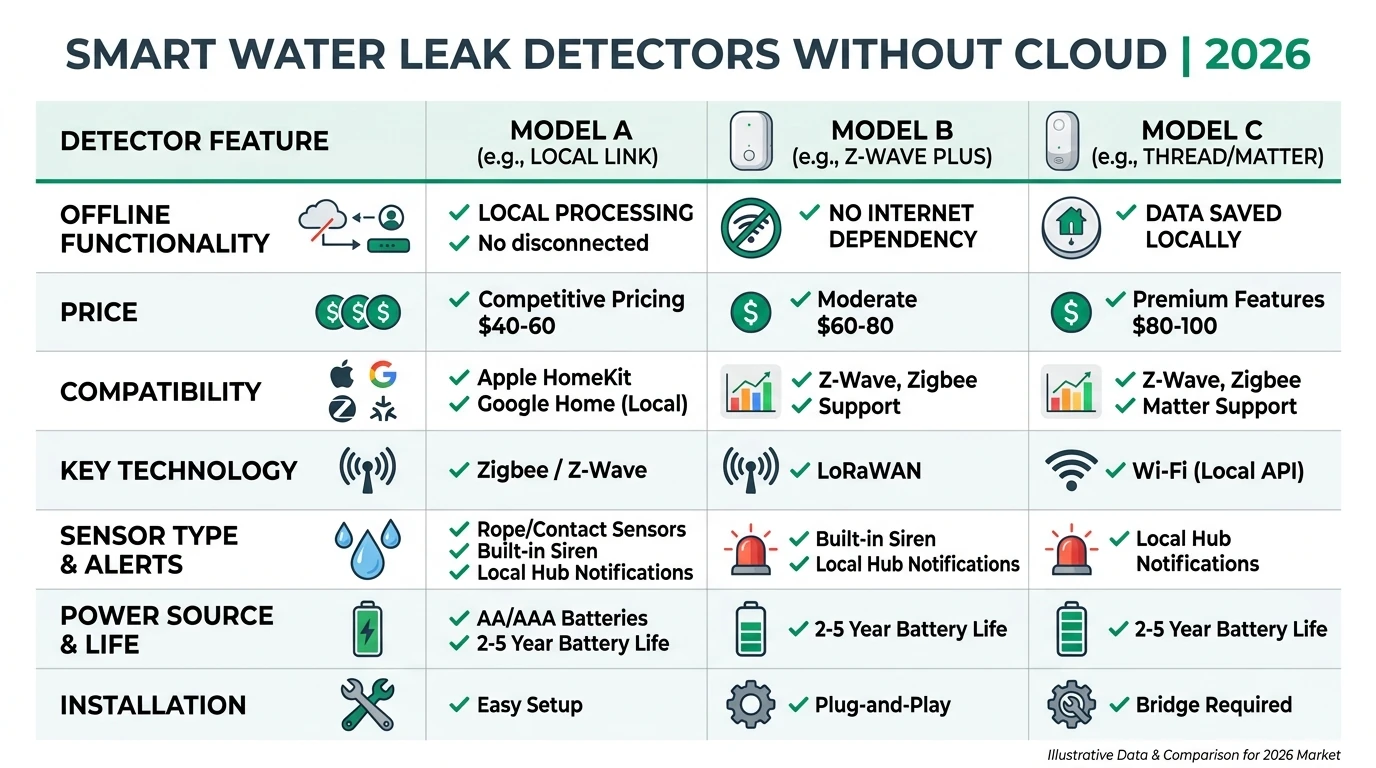
Choosing the right smart water leak detector involves comparing the available options to find the best fit for your needs. This section provides a comparative analysis of leading cloud-free detectors, focusing on their features, integration capabilities, and user experiences.
The Guardian Leak Prevention System stands out for its robust offline functionality. It automatically shuts off water during power or Wi-Fi outages, providing a reliable solution for preventing water damage. Its local processing capability ensures that data remains secure, making it an excellent choice for privacy-conscious users.
The Fibaro Flood Sensor, compatible with Apple HomeKit, offers seamless integration with other HomeKit-enabled devices. This compatibility allows users to create automated routines, such as turning off water supply when a leak is detected. The sensor’s sleek design and ease of installation further enhance its appeal.
For industrial environments, sensors that work with protocols like Modbus RTU or BACnet/IP are essential. These sensors can link directly with SCADA systems, providing real-time monitoring and control without relying on cloud services. This capability is crucial for maintaining operational efficiency and data security in industrial settings.
While these options offer distinct advantages, it’s important to consider your specific needs and environment when making a decision. Factors such as the size of your home, existing smart home infrastructure, and budget will influence your choice. By comparing the features and capabilities of each detector, you can select the one that best aligns with your requirements.
In summary, the Guardian Leak Prevention System and Fibaro Flood Sensor are leading options for cloud-free water leak detection. Their unique features and integration capabilities make them suitable for a variety of environments, ensuring effective leak prevention while maintaining data privacy.
Privacy and Security Considerations
Privacy and security are paramount when selecting smart home devices, and water leak detectors are no exception. This section explores the privacy and security considerations associated with cloud-free water leak detectors, highlighting their advantages over cloud-dependent alternatives.
Cloud-free detectors, such as the Guardian Leak Prevention System, offer enhanced privacy by processing data locally. This local processing capability ensures that sensitive information, such as water usage patterns and leak alerts, remains within your control. By eliminating the need for data transmission over the internet, these devices reduce the risk of data breaches and unauthorized access.
The Fibaro Flood Sensor’s compatibility with Apple HomeKit further enhances its privacy credentials. HomeKit’s secure framework encrypts data and restricts access to authorized devices, providing an additional layer of security. This integration ensures that your smart home ecosystem remains protected from external threats.
In contrast, cloud-dependent detectors rely on external servers to process and store data, increasing the risk of data exposure. These devices often require user accounts and internet connectivity, creating potential vulnerabilities that can be exploited by cybercriminals. For users prioritizing privacy, cloud-free detectors offer a more secure alternative.
While cloud-free detectors provide significant privacy benefits, it’s important to consider potential limitations. Without cloud connectivity, remote access to device data may be restricted, and firmware updates may require manual intervention. However, for users who value privacy and data security, these trade-offs are often acceptable.
In conclusion, cloud-free water leak detectors offer a secure and private solution for leak detection. By understanding the privacy and security considerations associated with these devices, you can make informed decisions about incorporating them into your smart home ecosystem.
Practical Implementation and Integration
Implementing cloud-free water leak detectors in your home or business requires careful planning and consideration. This section provides practical guidance on integrating these devices into your existing infrastructure, ensuring seamless operation and optimal performance.
The first step in implementing cloud-free detectors is assessing your current smart home setup. Determine the compatibility of your existing devices with the new detectors, particularly if you plan to integrate them with systems like Apple HomeKit. This assessment will help you identify any additional components or upgrades needed for successful integration.
Installation is another critical aspect of implementation. Cloud-free detectors are often designed for straightforward installation, with user-friendly interfaces and minimal maintenance requirements. Follow the manufacturer’s instructions carefully to ensure proper setup and functionality. If necessary, consult a professional installer to assist with complex configurations.
Once installed, configure the detectors to communicate with your local network or smart home system. For example, the Fibaro Flood Sensor can be integrated with Apple HomeKit to create automated routines and alerts. This integration enhances the user experience by centralizing control within your home environment.
Regular maintenance and testing are essential to ensure the continued effectiveness of your water leak detectors. Periodically check the devices for signs of wear or damage, and replace batteries as needed. Conduct routine tests to verify that the detectors are functioning correctly and that alerts are being received as expected.
In summary, implementing cloud-free water leak detectors involves careful planning, installation, and integration. By following these practical guidelines, you can ensure that your detectors operate effectively and provide reliable leak detection while maintaining data privacy.
Evaluating the Cost and Value of Cloud-Free Detectors
When considering cloud-free water leak detectors, it’s important to evaluate their cost and value. This section explores the financial aspects of these devices, helping you make informed decisions about your investment.
The initial cost of cloud-free detectors may be higher than their cloud-dependent counterparts due to their advanced local processing capabilities. However, this upfront investment can be offset by the long-term benefits of enhanced privacy and reliability. Devices like the Guardian Leak Prevention System offer features such as automatic water shut-off during outages, providing peace of mind and potentially reducing water damage repair costs.
In addition to the purchase price, consider the total cost of ownership, including installation, maintenance, and potential upgrades. Cloud-free detectors often require minimal maintenance, reducing ongoing expenses. However, if integration with existing smart home systems is needed, additional costs may be incurred for compatible components or professional installation services.
The value of cloud-free detectors extends beyond financial considerations. By maintaining data privacy and security, these devices protect sensitive information and reduce the risk of data breaches. This added value is particularly important for users who prioritize privacy and wish to maintain control over their data.
To assess the overall value of cloud-free detectors, weigh the initial and ongoing costs against the benefits of privacy, reliability, and peace of mind. Consider your specific needs and priorities when making a decision, and choose a detector that aligns with your budget and privacy preferences.
In conclusion, while cloud-free water leak detectors may involve a higher initial investment, their long-term value in terms of privacy and reliability makes them a worthwhile consideration for many users.
Checklist
- Assess current smart home setup for compatibility
- Follow installation instructions carefully
- Integrate detectors with local network or smart home system
- Conduct regular maintenance and testing
- Evaluate total cost of ownership and benefits
FAQ
Frequently Asked Questions
What are the benefits of cloud-free water leak detectors?
Cloud-free water leak detectors offer enhanced privacy and reliability by processing data locally, reducing the risk of data breaches and unauthorized access.
How do cloud-free detectors integrate with smart home systems?
Many cloud-free detectors, like the Fibaro Flood Sensor, integrate with systems like Apple HomeKit, allowing for centralized control and automation.
Are cloud-free detectors more expensive than cloud-dependent ones?
While the initial cost may be higher, cloud-free detectors offer long-term value through enhanced privacy and reduced maintenance expenses.
Can cloud-free detectors function during power outages?
Yes, many cloud-free detectors, such as the Guardian Leak Prevention System, include battery backup features to ensure functionality during outages.
What are the limitations of cloud-free water leak detectors?
Limitations include restricted remote access and potential manual updates, but these trade-offs are often acceptable for users prioritizing privacy.
Primary Sources Table
| Source | Description |
|---|---|
| 1 | Guardian Leak Prevention System features and offline functionality |
| 2 | Fibaro Flood Sensor compatibility with Apple HomeKit |
| 3 | General guidance on industrial sensors and protocols |
Conclusion
In conclusion, smart water leak detectors that operate without cloud dependency provide a secure and reliable solution for leak detection. By processing data locally, these devices enhance privacy and reduce the risk of data breaches. The Guardian Leak Prevention System and Fibaro Flood Sensor are leading options, offering robust features and seamless integration with local systems. When selecting a cloud-free detector, consider your specific needs and priorities to ensure the best fit for your home or business.
For further insights into smart home privacy, explore our guides on Apple HomeKit Secure Video vs. Local NVR for Privacy, Best Hardware for Local AI Smart Home 2026, and Best Local LLMs for Home Automation 2026.