Buying Guides
Smart Home Devices Without Internet 2026
Discover which smart home devices work offline in 2026, focusing on privacy and reliability.
Quick answer:
Executive Summary
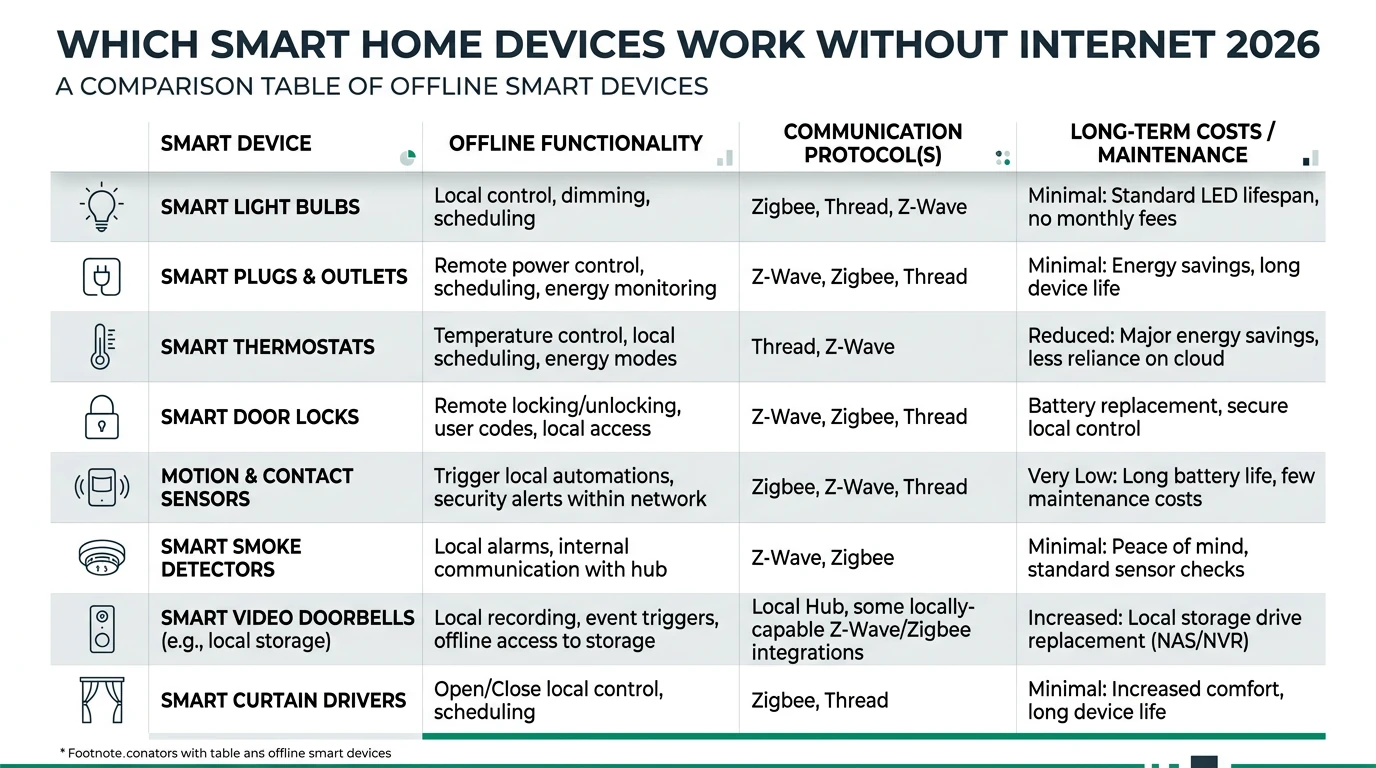
In 2026, the landscape of smart home devices has evolved significantly, with a strong emphasis on offline functionality, privacy, and reliability. As users increasingly seek solutions that do not rely on cloud services, the demand for devices that operate independently of the internet has surged. This guide explores the best offline-capable smart home devices, focusing on those that utilize local protocols such as Zigbee, Z-Wave, Thread, and Matter-over-Thread. These technologies ensure that your smart home remains functional even during internet outages, providing peace of mind and enhanced privacy.
The bottom line is that choosing the right offline-capable smart home devices can significantly improve your home’s privacy and reliability. By focusing on local control and avoiding cloud dependencies, you can create a smart home ecosystem that is both secure and efficient.
Understanding Offline-Capable Smart Home Devices
Offline-capable smart home devices are designed to function without an internet connection, relying on local networks and protocols to communicate and operate. This capability is crucial for maintaining privacy and ensuring that your smart home remains operational during internet outages. In 2026, the most reliable offline protocols include Zigbee, Z-Wave, Thread, and the emerging Matter-over-Thread standard.
Zigbee and Z-Wave are well-established protocols known for their reliability and low power consumption. They create mesh networks, allowing devices to communicate directly with each other rather than relying on a central hub or internet connection. This setup not only enhances reliability but also extends the range of your smart home network.
Thread and Matter-over-Thread are newer protocols gaining traction due to their interoperability and security features. Thread is designed for low-power devices and supports mesh networking, similar to Zigbee and Z-Wave. Matter, built on Thread, adds a layer of interoperability, allowing devices from different manufacturers to work seamlessly together. This standard is particularly appealing for those looking to future-proof their smart home setup.
Choosing devices that support these protocols ensures that your smart home can operate independently of the internet, providing a robust and secure environment. This independence is especially important for privacy-conscious users, as it minimizes the risk of data breaches and unauthorized access.
Key Benefits of Local Control and Privacy
Local control is a defining feature of offline-capable smart home devices. By processing data and executing commands locally, these devices eliminate the need for cloud-based services, significantly enhancing privacy. This local-first approach ensures that your personal data remains within your home, reducing the risk of exposure to external threats.
Privacy is a major concern for many smart home users, and offline-capable devices address this by minimizing data transmission over the internet. For example, local video storage solutions, such as PoE security cameras and Frigate NVR systems, keep your video feeds within your home network. This setup not only protects your privacy but also ensures that your security system remains operational even if your internet connection is disrupted.
Moreover, local control reduces the dependency on external servers, which can be a point of failure in cloud-based systems. By keeping operations within your home, you can maintain control over your devices and avoid potential service interruptions caused by server outages or maintenance.
The emphasis on privacy and local control makes offline-capable smart home devices an attractive option for those who prioritize security and reliability. By choosing devices that operate independently of the internet, you can create a smart home ecosystem that is both private and resilient.
Evaluating Devices for Offline Reliability
When selecting smart home devices for offline use, it’s essential to evaluate their reliability in the absence of an internet connection. Devices that support local protocols like Zigbee, Z-Wave, Thread, and Matter-over-Thread are generally more reliable than those relying on Wi-Fi, which often requires an internet connection for full functionality.
Home Assistant and Hubitat are two popular local-first ecosystems that offer robust offline capabilities. Home Assistant supports a wide range of protocols, including Zigbee, Z-Wave, and Matter, allowing for comprehensive local control. Its open-source nature provides flexibility and customization options, although it may require some technical expertise to set up and maintain.
Hubitat, on the other hand, is a user-friendly option that offers advanced automation features without relying on the cloud. It supports Zigbee and Z-Wave devices, providing a reliable and secure environment for your smart home. Hubitat’s focus on local processing ensures that your automations continue to function even during internet outages.
When evaluating devices, consider their protocol support, ease of setup, and long-term maintenance requirements. Devices that integrate seamlessly with local hubs and support multiple protocols offer the best offline reliability, ensuring that your smart home remains functional and secure.
Cost Considerations and Total Cost of Ownership
The total cost of ownership (TCO) is an important factor to consider when selecting offline-capable smart home devices. While the upfront cost of these devices may be higher than their cloud-dependent counterparts, the long-term savings can be significant due to reduced subscription fees and lower energy consumption.
Devices like the Wyze Cam, which offers local storage options, provide an affordable entry point into offline smart home systems. With prices under $50, these devices offer excellent value without the need for ongoing subscription fees. Similarly, the Homey Pro Mini, priced at $199, supports multiple protocols and offers a plug-and-play experience, making it an attractive option for those seeking a comprehensive offline solution.
Energy savings are another important consideration. Local control devices, such as smart thermostats, can reduce energy consumption by 10-15%, translating into lower utility bills over time. By eliminating the need for cloud-based services, you can also avoid monthly subscription fees, which can add up over the years.
When evaluating the cost of offline-capable smart home devices, consider both the upfront investment and the potential long-term savings. By choosing devices that offer local control and energy efficiency, you can create a smart home ecosystem that is both cost-effective and sustainable.
Privacy and Security Implications
Privacy and security are paramount when it comes to smart home devices, and offline-capable systems offer significant advantages in these areas. By processing data locally and minimizing internet connectivity, these devices reduce the risk of data breaches and unauthorized access.
For example, Frigate NVR systems process video feeds locally, ensuring that no data leaves your home. This local-first approach not only enhances privacy but also ensures that your security system remains operational even if your internet connection is disrupted. Similarly, Zigbee and Z-Wave devices communicate directly with each other, reducing the risk of remote hacking during internet outages.
Matter-over-Thread adds an additional layer of security with end-to-end encryption, ensuring that your data remains protected even as it travels across your local network. This standard is particularly appealing for those looking to future-proof their smart home setup, as it offers interoperability and enhanced security features.
When selecting smart home devices, prioritize those that offer local control and robust security features. By choosing devices that operate independently of the internet, you can create a smart home ecosystem that is both private and secure.
Setup Complexity and Support Considerations
Setting up offline-capable smart home devices can vary in complexity, depending on the system and devices you choose. DIY local hubs like Home Assistant offer extensive customization options but may require technical expertise to set up and maintain. This open-source platform supports a wide range of protocols and devices, providing flexibility and control over your smart home ecosystem.
For those seeking a more user-friendly option, the Homey Pro Mini offers a plug-and-play experience with app-based setup and management. This device supports multiple protocols, including Zigbee, Z-Wave, and Matter, making it an attractive option for those seeking a comprehensive offline solution without the need for extensive technical knowledge.
When considering setup complexity, evaluate your technical skills and the level of support available for the devices you choose. Open-source platforms like Home Assistant offer community support through forums, while vendor-supported systems like SmartThings provide app-based management and occasional cloud support.
By choosing devices and systems that align with your technical expertise and support needs, you can ensure a smooth setup process and reliable operation of your smart home ecosystem.
Checklist
- Evaluate protocol support
- Consider setup complexity
- Assess long-term support options
- Prioritize local control
- Review privacy features
FAQ
Frequently Asked Questions
What are the best offline smart home devices in 2026?
The best offline smart home devices in 2026 include Zigbee and Z-Wave devices, Matter-over-Thread sensors, and local hubs like Home Assistant and Hubitat.
Why choose offline-capable smart home devices?
Offline-capable devices enhance privacy and reliability by operating independently of the internet, reducing the risk of data breaches and service interruptions.
How do local protocols like Zigbee and Z-Wave work?
Zigbee and Z-Wave create mesh networks, allowing devices to communicate directly with each other, enhancing reliability and range without internet dependency.
What is Matter-over-Thread?
Matter-over-Thread is a protocol that combines interoperability and security, allowing devices from different manufacturers to work together seamlessly with end-to-end encryption.
Are there any hidden costs with offline smart home devices?
While the upfront cost may be higher, offline devices often save money in the long run by eliminating subscription fees and reducing energy consumption.
Primary Sources Table
| Index | Title/Description | Direct URL |
|---|---|---|
| 1 | 5 Must-Have Smart Home Devices in 2026 - Tech Times | Tech Times |
| 2 | 4 smart home devices that work perfectly offline - XDA Developers | XDA Developers |
| 3 | 11 Best Smart Home Automation Systems for 2026 Compared | Treasure Valley Solutions |
| 4 | My TOP 5 Smart Home Devices 2026 Edition - YouTube | YouTube |
| 5 | Smart Home Guide 2026 - What to Buy, Platform Updates - YouTube | YouTube |
Conclusion
In conclusion, the shift towards offline-capable smart home devices in 2026 reflects a growing emphasis on privacy, reliability, and local control. By choosing devices that operate independently of the internet, you can create a smart home ecosystem that is both secure and efficient. Whether you’re looking for basic switches and sensors or comprehensive automation systems, there are plenty of options available to suit your needs.